

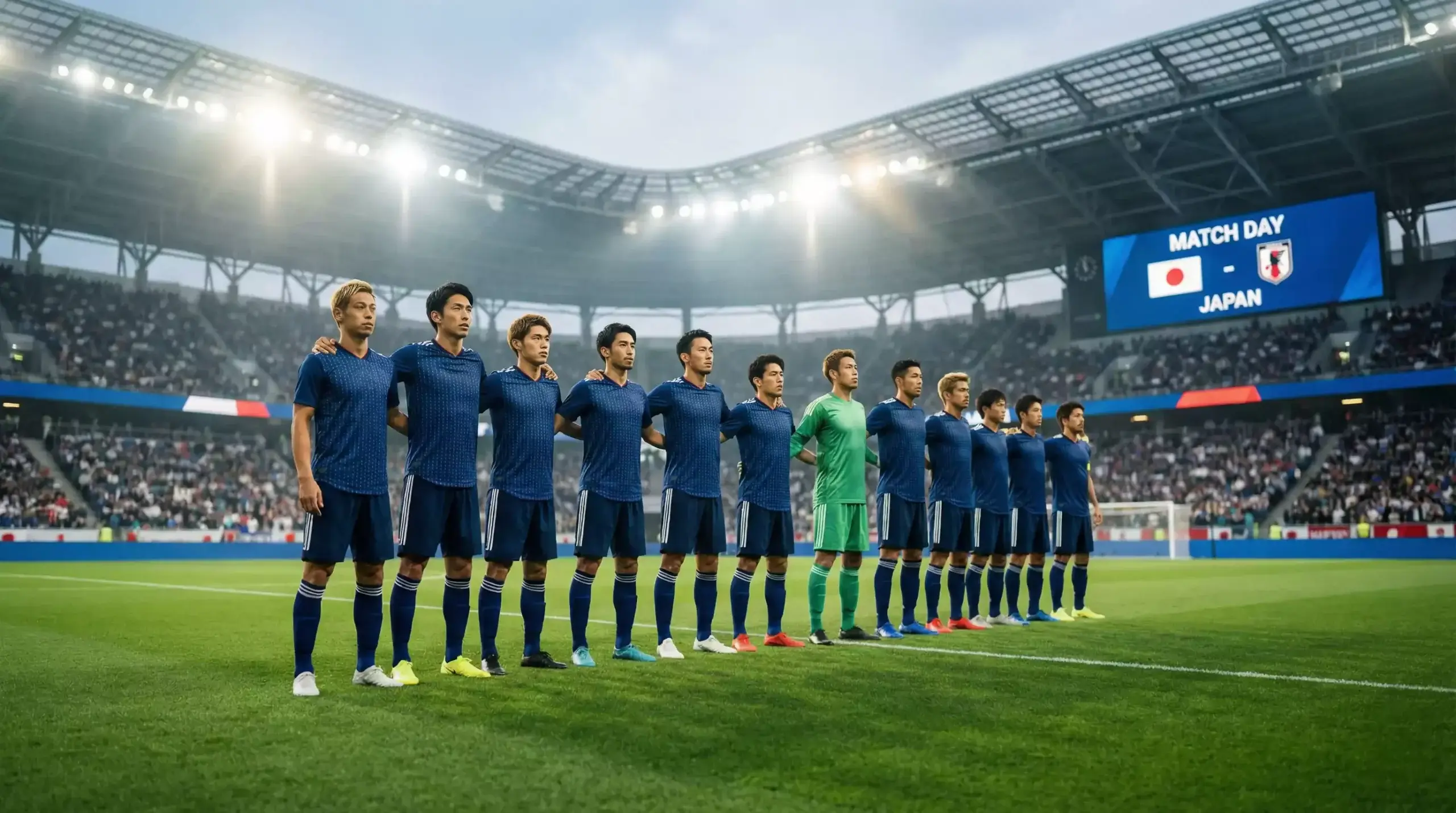
In the space of ninety minutes at the 2022 World Cup, Japan beat Germany. Four days later, they beat Spain. Two results that would have been considered fantasy a decade ago were produced with such tactical precision and collective intensity that they announced Japan’s arrival as a genuine force in world football. Then, as has happened before, Japan lost in the Round of 16 — to Croatia on penalties — and the familiar pattern reasserted itself: brilliant group stages, brutal knockout exits. Japan at the 2026 World Cup arrive determined to break that pattern, armed with the most European-integrated squad in Asian football history and a point to prove that their 2022 was a beginning, not a peak.
The odds have Japan at 33/1 to win the tournament — a price that would have seemed absurdly short five years ago but now reflects a genuine assessment of their capabilities. I think 33/1 is about right for the outright, but Japan’s value lies in the group-stage and quarter-final markets where their ability to produce shock results creates opportunities that longer-term bets can’t capture.
Squad: Europe’s Japanese Invasion
The transformation of Japan’s squad from domestically-based J-League players to a roster dominated by European league regulars is the single most significant development in Asian football over the past decade. Twenty of the likely 26-man squad play for clubs in Europe’s top five leagues — a number that exceeds several European nations at this World Cup. This isn’t a team that arrives in awe of European opponents. These players face them every week.
Takefusa Kubo at Real Sociedad has developed into one of La Liga’s most creative attacking players, his dribbling ability and vision from the right wing giving Japan an individual threat that previous generations lacked. Kaoru Mitoma at Brighton provides electric pace and directness on the left — Irish Premier League fans know his quality intimately, having watched him destroy full-backs across two seasons with runs that combine acceleration, balance, and an increasingly reliable end product. The Kubo-Mitoma combination on opposite flanks gives Japan the most dangerous wide pairing outside the traditional European contenders.
In midfield, Wataru Endo at Liverpool anchors the defensive position with the discipline and reading of the game that Jurgen Klopp and his successor trusted implicitly. His ability to shield the back four, intercept passes, and distribute quickly makes him the tactical foundation upon which Japan’s pressing system is built. Endo’s influence extends beyond his on-ball contributions — he sets the pressing triggers for the entire team, directing teammates into position and timing the collective press that has become Japan’s most devastating weapon. Alongside him, Daichi Kamada provides creative passing and late runs into the box from his base in the Bundesliga — his goal record from midfield at club level suggests he’ll add three or four goals across the tournament if Japan progress to the knockout rounds. Ao Tanaka, now established at a top Bundesliga club, adds box-to-box energy that complements Endo’s positional discipline, his stamina and willingness to cover ground making him one of the hardest-working midfielders at the World Cup.
The centre-forward position belongs to Ayase Ueda, whose prolific seasons in the Eredivisie and subsequent move to a top European league have confirmed his quality at the highest level. His movement in the box is intelligent rather than explosive, finding pockets of space between defenders and timing his runs to meet deliveries from Kubo and Mitoma with a composure that belies his relatively modest international goal record. Ko Itakura provides defensive leadership from centre-back, his Bundesliga experience giving Japan a physical presence that Asian defenders historically lacked when facing European forwards. Beside him, Takehiro Tomiyasu — when fit — offers the versatility to play centre-back or full-back with equal assurance, his Arsenal pedigree providing the kind of high-level European experience that the previous generation of Japanese defenders simply didn’t have.
The depth of the squad extends to the bench, where Junya Ito provides a different wide option — more direct and more willing to deliver early crosses than Kubo — and Ritsu Doan adds goalscoring threat from midfield. The goalkeeping position has been settled by Zion Suzuki, whose development at a European club has given Japan a modern goalkeeper who distributes quickly and reads the game well from his line. The collective quality of this squad, measured by the average level of league competition their players participate in, exceeds every previous Japanese World Cup squad by a significant margin.
Group F: Netherlands, Tunisia, Sweden
Japan’s group is arguably the most competitive at the tournament, and Group F has been widely identified as a potential “group of death” in the expanded format. The Netherlands are favourites, but Japan’s 2022 record of beating Germany and Spain in the group stage means that no European team can feel secure against them — the Samurai Blue have demonstrated repeatedly that they can raise their level for the biggest matches when their system is functioning at full capacity. The Japan-Netherlands fixture is the match I’ll be watching most closely from a betting perspective — Japan’s pressing intensity against the Dutch midfield, particularly if Frenkie de Jong is not fully fit, could produce the kind of upset that defined their 2022 campaign. Van Dijk’s declining pace against Mitoma’s acceleration is a matchup that favours the Japanese winger, and if Japan can isolate that one-on-one on the left flank, they have a route to goal that the Netherlands will struggle to close.
Tunisia offer a different challenge — physical, defensively disciplined, and experienced in African and World Cup football. Their 2022 World Cup campaign included a victory over France (admittedly a rotated squad) and a 0-0 draw with Denmark that showcased their defensive resilience. The Japan-Tunisia match will be tactically fascinating, with both teams preferring to defend deep and counter-attack rather than dominate possession. The result could hinge on which team adapts their approach first — whichever side commits to attacking will create opportunities for the other to exploit on the transition. Sweden, returning to the World Cup with Alexander Isak and Dejan Kulusevski leading their attack, present a threat that combines Premier League quality with Scandinavian physical intensity. Irish fans know both players well from Newcastle and Tottenham respectively, and their combination of pace, power, and finishing quality makes Sweden dangerous against any opponent. The Japan-Sweden fixture could be the group’s most open match, with both teams likely to commit players forward in search of the goals needed to secure qualification.
Japan are 7/2 to win the group — a price that accurately reflects their capability without suggesting they’re favourites. I’d back Japan to qualify from the group at 4/6, a bet that their squad quality and tournament experience fully justify. My prediction: Netherlands top with 7 points, Japan qualify second with 5, Sweden third with 4.
Japan’s Odds: Punching Above Their Weight
At 33/1, Japan are the highest-ranked Asian team in the outright market and arguably the most likely non-European, non-South American team to reach the quarter-finals. Their pressing system, European-based squad, and 2022 pedigree give them a realistic path to the last eight, particularly if the knockout draw falls kindly. Japan to reach the quarter-finals at 4/1 is the bet I’d recommend — it captures their upside without requiring the seven-match sustained excellence that their squad depth can’t support against the very best.
For player markets, Mitoma to score in the group stage at 5/4 is straightforward value — his pace against full-backs who haven’t faced him in the Premier League will create chances, and his finishing has improved markedly in the 2025-26 season. Kubo at 3/1 for the same market offers similar logic from the opposite flank. Japan to beat the Netherlands at 7/2 is the speculative group-stage upset that their 2022 record fully supports — they’ve done it before against better teams, and the tactical template exists to do it again.
A History of Group Stage Shocks
Japan’s World Cup history is a paradox of excellence and frustration. They’ve produced some of the most memorable group-stage results in tournament history — beating Germany and Spain in 2022, beating Colombia in 2018, beating Cameroon in 2010 — but have never progressed beyond the Round of 16. The pattern is so consistent that it raises questions about whether the issue is tactical, physical, or psychological.
The physical explanation has the most evidence behind it. Japan’s pressing intensity in group-stage matches is among the highest at any World Cup, but their ability to sustain that intensity into knockout rounds — where extra time and penalties add thirty or more minutes — has historically fallen short. The squad’s physical conditioning has improved with more players based in physically demanding European leagues, but the question of whether they can maintain their pressing game across four knockout matches (in the expanded format) remains unanswered.
The 2026 tournament offers Japan their best chance to break through. The expanded format means the Round of 32 — their first knockout match — is likely to be against a weaker opponent than previous Round of 16 fixtures. If Japan can win that match comfortably and preserve energy for the Round of 16, they’ll arrive at the traditional barrier point with fresher legs than in any previous tournament. That structural advantage, combined with the strongest squad Japan have ever assembled, makes the 2026 World Cup the tournament where the knockout curse is most likely to end.
