

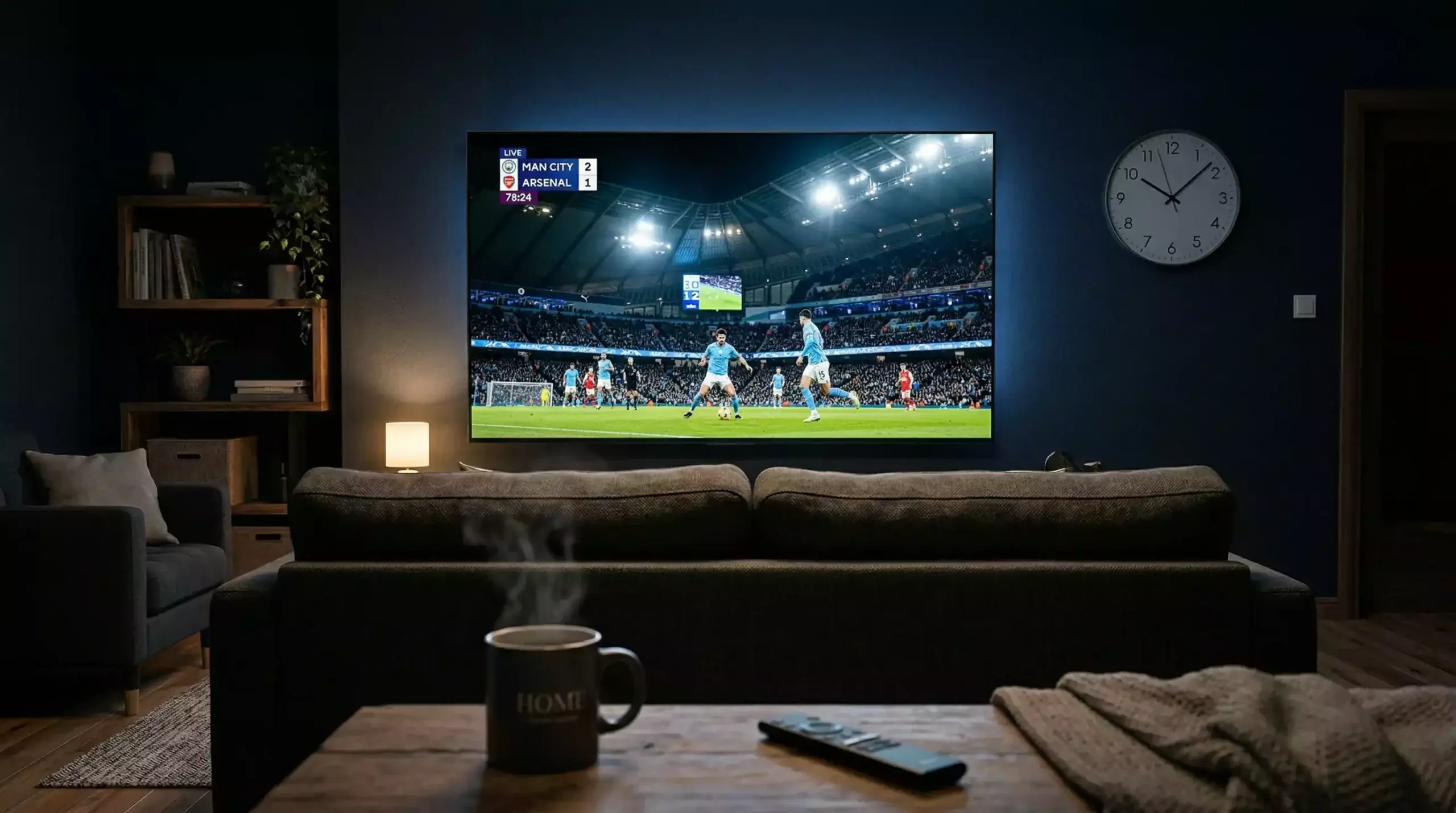
Thirty-nine days. One hundred and four matches. Sixteen venues spread across three countries and four time zones. The 2026 World Cup is the largest football tournament ever staged, and for Irish fans, the challenge is not just deciding what to watch — it is figuring out when everything kicks off. North American time zones mean that the majority of matches fall in the Irish evening and night-time window, with some pushing past 3am IST. This is your complete World Cup 2026 schedule in Irish time — every kick-off converted, every late night flagged, and every must-watch fixture identified for those of us watching from this side of the Atlantic.
How the Time Zones Work: ET to IST
I have received more questions about time zone conversions for this World Cup than about any other single topic, and the confusion is understandable. The 2026 tournament spans three countries with four distinct time zones, and during Irish Summer Time — which runs from late March through late October — the calculation changes depending on where the match is being played.
Ireland operates on IST (Irish Summer Time) during the World Cup, which is UTC+1. The key conversions are straightforward once you memorise them. Eastern Time (ET), covering venues in New York, New Jersey, Philadelphia, Boston, Miami, and Atlanta, is UTC-4 during summer — meaning IST is five hours ahead. A match kicking off at 1pm ET starts at 6pm IST; a 7pm ET fixture begins at midnight IST; a 9pm ET blockbuster does not start until 2am IST.
Central Time (CT), covering Houston, Dallas, Kansas City, and all three Mexican venues (Mexico City, Monterrey, Guadalajara), is UTC-5 in summer — six hours behind IST. A 6pm CT kick-off at the Estadio Azteca translates to midnight IST. Pacific Time (PT), covering Seattle, San Francisco, and Los Angeles, is UTC-7 — eight hours behind IST. A 7pm PT fixture on the west coast of America does not begin until 3am IST, making it functionally unwatchable for most Irish viewers without serious commitment or a next-day schedule that forgives a 4am bedtime.
The simplest rule: add five hours for east coast matches, six for central, seven for mountain, and eight for the west coast. Write those numbers on a Post-it note and stick it to your television. You will use it every day for five and a half weeks.
Group Stage Schedule: 11–28 June
The group stage runs for eighteen days and features ninety-six matches across twelve groups — an average of more than five matches per day during the busiest stretches. FIFA’s scheduling distributes matches across multiple kick-off slots each day, which means Irish viewers will have fixtures running from late afternoon through to the early hours of the following morning.
The typical group-stage day will offer three or four kick-off windows. The earliest matches — likely 12pm or 1pm ET — begin at 5pm or 6pm IST, perfect for after-work viewing or an early evening in the pub. The middle window — 4pm or 5pm ET — translates to 9pm or 10pm IST, the prime-time slot for Irish television and the window most matches will fall into. The late window — 7pm or 9pm ET — pushes to midnight or 2am IST, requiring commitment from Irish fans but delivering the kind of atmosphere that only a floodlit World Cup match in a packed American stadium can produce.
Mexican venue matches add an hour to the conversion: 6pm CT at the Azteca is midnight IST. The three Mexican stadiums will host a significant chunk of group-stage fixtures, particularly for Group A (Mexico, South Korea, South Africa, Czechia) and other groups allocated to the Mexican venue cluster. West coast matches — Seattle, San Francisco, Los Angeles — are the most challenging for Irish viewers. A 5pm PT kick-off at Lumen Field in Seattle does not start until 1am IST, and a 7pm PT fixture at SoFi Stadium in LA begins at 3am IST. These west coast fixtures will test the dedication of even the most committed insomniac.
The group stage’s final matchday for each group features simultaneous kick-offs — two matches at the same time to prevent collusion between teams who know the other result. For Irish viewers, this means choosing between fixtures or finding a pub with multiple screens. The simultaneous kick-off format eliminates the ability to watch every match live, making the group stage an exercise in prioritisation. My recommendation: build your schedule around Scotland in Group C, England in Group L, and one wildcard group that catches your attention during the opening week.
Knockout Rounds Schedule: 29 June–19 July
The knockout rounds begin on 29 June with the round of 32 — a new addition for the expanded 48-team format — and culminate in the final at MetLife Stadium on 19 July. The progression moves through the round of 16 (5–8 July), quarter-finals (11–12 July), semi-finals (15–16 July), the third-place match (18 July), and the final itself.
Knockout matches receive premium broadcast scheduling, which generally means fewer fixtures per day but later kick-off times designed to maximise the North American primetime audience. From an Irish perspective, knockout matches will predominantly kick off between 9pm IST and 2am IST, with the semi-finals and final likely starting at midnight or later. The round of 32 — with sixteen matches over four days — maintains the group stage’s multi-window approach, but from the round of 16 onwards, individual matches become appointment viewing with dedicated broadcast windows.
The quarter-finals on 11–12 July feature two matches per day, likely at 9pm IST and 1am IST. The semi-finals on 15–16 July are one match per day, ensuring maximum global attention for each fixture. The final on 19 July at MetLife Stadium will kick off at approximately 9pm ET (2am IST on 20 July) — the latest and most demanding viewing commitment of the tournament. For those who have followed the World Cup for five weeks, the final represents the ultimate test of devotion: a 2am start on a Sunday night into Monday morning. Clear Monday’s calendar. It will be worth it.
The third-place match on 18 July is historically under-attended and under-watched, but it often produces entertaining, pressure-free football. The fixture typically kicks off earlier than the final — expect a 9pm IST start — making it the tournament’s penultimate late night.
The Late-Night Matches: What is Worth Staying Up For
Not every match deserves your sleep. The 2026 World Cup will feature matches finishing at 4am IST on the west coast, and nobody — not even the most devoted analyst — should feel obligated to watch every minute of a group-stage dead rubber between two eliminated teams in Seattle. The art of World Cup viewing from Ireland is selective commitment: knowing which late nights are essential and which are optional.
The essential late nights begin with the Group C fixtures featuring Scotland. Every Scotland match is mandatory viewing for Irish fans regardless of kick-off time, and the Brazil-Scotland opener will almost certainly fall in the late-night window (11pm-1am IST). Do not miss it. The atmosphere, the stakes, and the Celtic bond make this the kind of match that becomes a shared cultural moment across Ireland.
England’s Group L matches are the secondary priority. The England-Croatia fixture on matchday two will receive a prime broadcast slot — expect a midnight IST start — and the quality on the pitch justifies the late night. England’s other fixtures against Panama and Ghana carry lower must-watch urgency but remain worth following for anyone invested in the Premier League players who will feature.
Beyond the Irish-interest matches, the late-night fixtures worth your sleep sacrifice are the matches featuring genuine tournament contenders in high-stakes situations. Brazil against Morocco in Group C. France against Senegal in Group I. Argentina’s group matches in Group J. These fixtures combine the highest quality of football with the intensity of World Cup competition, and the late-night timing adds an intimacy that daytime viewing cannot replicate — just you, the television, and a match that matters, with the rest of the country asleep.
The matches not worth losing sleep over: group-stage fixtures between eliminated or near-eliminated teams in the tournament’s second and third weeks, particularly those hosted at west coast venues with 3am IST kick-offs. Check the standings, assess the stakes, and make your decision. The World Cup lasts thirty-nine days; pacing yourself is not a sign of weakness. It is a survival strategy. The full World Cup 2026 groups and draw breakdown helps you identify which groups will produce the most competitive final matchdays.
