

Loading...
I placed my first World Cup bet in a Paddy Power shop on Baggot Street in 2010. South Africa hosting, Cesc Fabregas to score anytime against Switzerland, 7/2. He came on as a sub in the 66th minute, did absolutely nothing, and I walked home lighter by a tenner. That was the day I learned that a World Cup bet is never just a bet — it is a five-week emotional commitment wrapped in a till receipt.
Sixteen years, three World Cups, and roughly four thousand spreadsheet rows later, I can tell you that the punters who win during a tournament are not the ones with the sharpest instincts. They are the ones with a system. A framework. A set of principles they stick to when the group stages throw chaos at them at midnight and the accumulators start falling apart on matchday two.
This world cup betting guide is that framework. The 2026 tournament is a different beast from anything we have seen before — 48 teams, 12 groups, 104 matches across three countries and four time zones. The old playbook needs rewriting. I have spent the past nine months modelling how the expanded format changes the odds landscape, which markets gain value, and where the traps sit for Irish punters betting from their couches at one in the morning.
Whether you are a seasoned accumulator builder or someone who places one outright bet and leaves it alone until the final, this guide walks you through every stage of the tournament with the data and the strategy to back it up. No empty tips. No promises. Just the edge you need to make smarter decisions across 39 days of football.
How the 48-Team Format Changes the Betting Landscape
Every previous World Cup in my lifetime had 32 teams. That number sat in your head like a constant — eight groups of four, two qualify from each, sixteen go through. You knew the rhythm. You knew that by the third group match, half the games were dead rubbers. You knew exactly when the real tournament started. Forget all of that.
The 2026 World Cup features 48 teams in 12 groups of four. The top two from each group advance automatically, and the eight best third-placed teams join them in a round of 32. That means 32 out of 48 teams progress — a qualification rate of 66.7%, up from 50% in previous editions. This single structural change rewires how you should think about every market on the board.
Start with the group stage. In the old 32-team format, a team needed roughly four points to feel safe. At this World Cup, three points — one win and nothing else — will likely be enough for third place in most groups. My modelling of the 12-group structure suggests that a third-placed team with three points and a goal difference of zero or better has roughly an 80% chance of advancing. That reshapes how you bet on group outcomes entirely.
Favourites in each group will not be desperate to win every match. They need to qualify, not dominate. A team like Brazil in Group C will prioritise fitness management over points accumulation once their spot is secure. That means more draws in the final group-stage round, more cautious performances, and more value in the draw market than punters typically assume at a World Cup.
The expanded field also introduces 16 teams that would not have qualified under the old format. Haiti, Curaçao, Cabo Verde, Bosnia and Herzegovina, Iraq, Jordan — these are nations making their first or second World Cup appearance. They arrive with less tournament experience, thinner squads, and shorter odds than their ability warrants. The bookmakers know this. The group-winner markets for groups containing debutants will look heavily skewed toward the seeded team, and rightly so, but the real question for bettors is whether the price on second-place finishers reflects the uncertainty these newcomers introduce.
Consider Group E: Germany, Ecuador, Côte d’Ivoire, Curaçao. Germany’s group-winner odds will sit around 1/3 fractional. Ecuador and Côte d’Ivoire will be priced as genuine contenders for second. But the fixtures against Curaçao matter more than you might think. If Côte d’Ivoire hammer Curaçao 4-0 while Ecuador only scrape past them 1-0, goal difference becomes the deciding factor between second and third — and that shifts the entire knockout bracket position.
The round of 32 is itself a new betting market. In previous tournaments, the last 16 was the first knockout round. Now there is an additional elimination stage, which means more knockout matches, more extra-time possibilities, and more penalty shootouts across the tournament. Historical data from the Champions League and previous World Cups tells us that roughly 22% of knockout matches go to extra time. With 32 knockout games before the quarter-finals alone, you are looking at six or seven matches going beyond 90 minutes in the early rounds. The “to qualify” market and the “match to go to extra time” market both gain structural value.
The 48-team format also lengthens the tournament from 29 days to 39 days. That is ten extra days of football, ten extra days of fatigue accumulation, ten extra days of injuries and suspensions building up. Deep-squad nations — France, England, Spain — hold a measurable advantage in the later rounds. Teams relying on a core eleven, like Croatia or Uruguay, face a compounding fitness tax that previous World Cups did not impose this heavily.

For bettors, the bottom line is this: the 48-team World Cup is not a scaled-up version of the 32-team World Cup. It is a structurally different tournament that rewards patience, punishes overreaction to group results, and creates value in markets that previous editions barely made interesting. The rest of this guide is built on that foundation.
World Cup Betting Markets — From Outright to In-Play
A colleague once described the modern betting market menu as “a restaurant where the chef keeps adding courses nobody ordered.” He was not wrong. The number of markets available for a single World Cup match has exploded from around 15 in 2010 to well over 200 today. Most of them are noise. Knowing which ones reward skill — and which ones are margin traps — is half the battle.
The outright winner market is the simplest and the most efficient. You pick a team to win the tournament, you get a price, and you wait. At the time of writing, Argentina sit around 9/2, France at 5/1, Brazil at 6/1, England at 8/1, Spain at 8/1, and Germany at 12/1. These prices already incorporate squad depth, draw difficulty, historical performance, and current form. They also bake in roughly 15-20% overround, which means the bookmaker’s margin is significant. For outright bets, patience matters. Odds shift as squad announcements, friendlies, and injury news filter through. The best outright price you will get on a genuine contender is almost always three to six weeks before the tournament, not on the eve of the opening match.
Group winner markets let you bet on which team finishes top of a specific group. These are where detailed knowledge pays off. The raw odds on Brazil topping Group C might sit around 4/9 fractional (1.44 decimal), but if you understand Morocco’s defensive structure and Scotland’s ability to grind results, you might recognise that Brazil’s path to first place is harder than the price implies. Conversely, a group like Group J — Argentina, Austria, Algeria, Jordan — offers less ambiguity, and the favourite’s price reflects that.
Match result, or 1X2, is the bread-and-butter market. You pick a home win, draw, or away win for a specific match. At a World Cup, the “home” designation is largely cosmetic — but not entirely, because the host nations (USA, Mexico, Canada) do play in front of their own crowds. In non-host matches, the 1X2 market is essentially a three-way moneyline with no built-in advantage for either side. Draws are chronically undervalued at World Cups. Across the last five tournaments, draws occurred in 22-26% of group-stage matches, yet the average draw price implies a probability closer to 18-20%. That gap is real, and it persists because recreational bettors gravitate toward winners.
Asian handicap and goal-line markets remove the draw as an outcome and offer a spread. If you back Brazil at -1.5 against Haiti, Brazil must win by two or more goals for your bet to land. These markets are tighter in margin than 1X2 — typically 3-5% overround versus 8-12% for traditional match result — which makes them the preferred playground for serious punters. The 48-team format, with its influx of weaker nations, will produce more lopsided fixtures in the group stage. The handicap market is where you extract value from those mismatches without taking a terrible price on a straight win.
Over/under goals markets let you bet on the total number of goals in a match. The standard line is 2.5 goals: over means three or more, under means two or fewer. At World Cups, the historical average sits around 2.5 goals per game, which means this market is genuinely a coin flip at the tournament level. However, individual matches deviate wildly. A group-stage clash between Germany and Curaçao is far more likely to go over 2.5 than a knockout tie between France and the Netherlands. Context matters more than base rates here.
Both teams to score is a market that has surged in popularity over the past decade. You bet on whether both teams will find the net. At the 2022 World Cup, both teams scored in 52% of matches. The expanded 2026 format, with more mismatches in the group stage, will likely push that percentage down. When Germany face Curaçao, the chance of Curaçao scoring is significantly lower than a typical World Cup match, and the “no” side of both teams to score becomes the value play.
The top scorer market — Golden Boot betting — is a market covered in detail in our odds breakdown, but the key principle here is that the winner almost always comes from a team that reaches at least the semi-finals. More matches mean more opportunities, which means backing a scorer from a potential finalist is structurally smarter than backing a prolific striker from a team likely to exit in the round of 32.
In-play betting deserves its own mention because the 2026 World Cup will generate massive in-play volume. With matches kicking off at 17:00, 20:00, 23:00, and 02:00 IST, many Irish punters will be watching live on their phones or laptops with a betting app open beside them. In-play markets move fast, and they punish hesitation. The edge in live betting comes from watching the match — actually watching it, not following a data feed — and recognising tactical shifts before the odds compiler adjusts. A manager bringing on a defensive midfielder in the 55th minute of a 1-0 lead is a signal the bookmaker’s algorithm processes slowly. Your eyes are faster than their model, but only if you are watching.
Betting Through the Group Stage: Lessons from Past Tournaments
The 2022 World Cup opened with Argentina losing to Saudi Arabia. If you had backed Argentina in a group-stage accumulator — as roughly 40% of World Cup acca bettors did, according to industry estimates — your tournament was over in 90 minutes. Group stages are chaos engines, and the punters who survive them are the ones who expect chaos rather than fight it.
Let me walk through what the data from previous World Cups actually tells us about group-stage betting. Across the 2014, 2018, and 2022 tournaments, pre-tournament favourites to win their group did so 58% of the time. That is barely better than a coin flip dressed in a good suit. The implied probability in most group-winner markets, however, sits around 65-75% for the favourite. The gap between actual performance and market expectation is your opportunity — but only if you are selective.
Matchday one is the most volatile. Across the last three World Cups, favourites won their opening group match 62% of the time — solid, but far from certain. The opening fixture carries unique psychological weight. Players are undercooked. Managers are cautious. Underdogs are at peak motivation. Saudi Arabia beating Argentina, Japan beating Germany, South Korea beating Germany — all were opening-round results. If you bet on matchday one, lean toward the draw or the underdog double chance rather than laying short prices on big names.
Matchday two is where the tournament settles. Teams that lost their opener are desperate, which makes them dangerous but also predictable. A team trailing on zero points after one match will attack, which opens space for counterattacking opponents and pushes the over/under line higher. In 2022, the average goals per game jumped from 2.4 on matchday one to 2.8 on matchday two. If you are looking for over 2.5 goals, matchday two is your window.
Matchday three splits into two categories. Dead-rubber matches, where both teams are already qualified or already eliminated, produce unpredictable results because managers rotate squads. Live matches, where qualification is on the line, produce tighter, more defensive football. The under 2.5 market gains value in must-win matches because both teams play with fear. At this World Cup, the third-place qualification route means fewer dead rubbers than previous editions — most teams will still have something to play for on matchday three, which tilts the overall goal expectation downward.
One pattern I have tracked across five World Cup cycles: the first goal in a group-stage match comes before the 30th minute 54% of the time. That number is higher than in club football, where it sits around 47%. The reason is tactical — international teams are less cohesive defensively in the opening quarter of a match, and the pressing structures that club sides drill daily are looser at national level. If your bookmaker offers a “goal before 29:59” market, the historical data supports the over side.
The single most important group-stage discipline is bankroll pacing. There are 48 group-stage matches at this World Cup. If you bet the same stake on every match, you will bleed your bankroll through sheer volume. A smarter approach: identify eight to twelve group-stage matches where you see genuine value, stake those properly, and watch the rest as a neutral. The group stage is not a sprint. It is the qualifying laps before the race begins.
Knockout Rounds: Where the Real Value Lives
I made more profit from the 2022 World Cup knockout stage than from the entire group stage combined. That was not luck. Knockout football is fundamentally different from group football, and most recreational bettors do not adjust their approach when the format changes. That failure to adapt is your edge.
The first thing to understand about knockout matches is that they are conservative by nature. When elimination is on the line, managers default to defensive structure. At the 2022 World Cup, knockout matches averaged 2.1 goals per game compared to 2.7 in the group stage. The under 2.5 goals market hit in 10 of 16 knockout matches — a 62.5% strike rate against typical implied odds of around 48%. That is an enormous discrepancy, and it has held reasonably steady across multiple tournaments.
Extra time and penalties create their own market dynamics. At this World Cup, the round of 32 is a new stage, adding 16 knockout matches before the quarter-finals. Based on Champions League and World Cup data combined, roughly 20-25% of knockout matches are level after 90 minutes. Applied to the 2026 bracket, that translates to seven or eight matches going to extra time across the entire knockout phase. The “match to go to extra time” market typically pays around 3/1 (4.00 decimal), which implies a 25% probability. The historical data sits right at that edge, so the value is thin — but the “draw at 90 minutes” market, which pays slightly better, is where the same thesis delivers more consistent returns.
Penalty shootouts are not random. I know that sounds provocative, but the data supports it. European and South American teams convert penalties at a rate of 72-78% in major tournaments, while teams from other confederations sit closer to 65-70%. Cultural factors, pressure management, and penalty-taking traditions all play a role. If a knockout match between, say, England and Ghana reaches penalties, England’s historical conversion rate of 67% (the lowest among traditional European powers) becomes relevant. The “to qualify” market in matches involving penalty-prone teams carries hidden edges.
Squad depth becomes the dominant factor from the quarter-finals onward. At the 2018 World Cup, France used 22 of their 23-man squad across seven matches. Croatia used just 17 players meaningfully. France won the final 4-2, and while squad usage was not the only factor, the cumulative fatigue on Croatia’s core players was visible in the second half. At this World Cup, squads are expanded to 26 players, and the 39-day schedule makes rotation even more critical. When building your knockout-stage bets, check which teams rotated during the group stage. A manager who used his bench players in dead rubbers was investing in knockout freshness — and that investment pays dividends.
The quarter-final stage historically produces the best betting value of the entire tournament. By that point, the remaining eight teams are known quantities. You have three weeks of match data, tactical patterns, injury updates, and form assessments. The bookmaker’s pre-tournament model is stale, but the quarter-final odds are still partially anchored to it. Your live assessment, built on watching every group match and round-of-32 tie, is fresher than the algorithm. That informational edge narrows as the tournament progresses — by the semi-finals, everyone is watching — but at the quarter-final stage, the attentive punter has a genuine advantage.
Building World Cup Accumulators That Actually Work
The accumulator is the most Irish of all bet types. Ask any punter in any Paddy Power shop on any Saturday afternoon and they will show you a docket with six legs, five of which are about to lose. The acca is beloved because it turns a fiver into the dream of a holiday. It is also, statistically, the worst-value bet in the bookmaker’s arsenal — unless you build it with discipline.
Here is why most World Cup accumulators fail. The average acca combines four to six selections, each priced around 1/2 to 4/5, creating a combined price somewhere between 5/1 and 15/1. The problem is compounding probability. If each leg has a 60% individual chance of landing, a four-fold has a combined probability of just 13%. A six-fold drops to 4.7%. You are fighting mathematics, and mathematics does not care about your gut feeling on Brazil.
The accumulators that work at a World Cup share three characteristics. First, they keep the number of legs low — three is the sweet spot. A well-constructed three-fold gives you a meaningful return (typically 3/1 to 7/1) without the catastrophic probability drain of a six-fold. Second, they mix market types. Combining three match-result bets in the same round is a recipe for failure because one upset kills the entire ticket. Instead, mix an outright group winner with a player to score anytime and a match under 2.5 goals. Different markets carry different risk profiles, and mixing them reduces correlation between legs.
Third, and this is the part most punters ignore, the best World Cup accumulators are built around structural edges rather than opinions. A structural edge is a pattern that holds across tournaments regardless of specific teams. For example: the first match of a knockout round (historically a cautious affair) combined with the over 2.5 in a group-stage match between a favourite and a debutant (historically high-scoring) creates a two-fold where both legs are supported by data, not narrative.
Let me give you a practical framework for building group-stage accumulators at this World Cup. Identify three groups where the favourite is genuinely strong and the weakest team is a clear step below. Group E (Germany, Ecuador, Côte d’Ivoire, Curaçao), Group J (Argentina, Austria, Algeria, Jordan), and Group H (Spain, Uruguay, Saudi Arabia, Cabo Verde) all fit this profile. A three-fold combining Germany, Argentina, and Spain to win their respective groups pays roughly 4/1 at current prices. Each leg has an independent probability north of 60%. The combined probability is around 22%, and you are getting 4/1 — that is a positive expected value bet.
For knockout accumulators, the strategy shifts. Focus on “to qualify” markets rather than match results, because knockout matches can be won in extra time or on penalties without the outright result going your way. A three-fold of strong teams to qualify from the round of 32 — say, France, Brazil, and England — will pay less (typically 2/1 to 3/1) but will hit more often. Over a tournament, a series of short-priced qualifying accas with high strike rates will outperform one ambitious six-fold that never lands.
One last note on timing. Accumulator odds are at their best early in the week, before the match-day market sharpens. If you know which matches you want to include, place the acca on Monday or Tuesday rather than waiting until kick-off day. The line movement between early-week and match-day is typically 5-10% in the bookmaker’s favour, and over a five-week tournament, that erosion compounds.
Managing Your Bankroll Across 39 Days
The 2018 World Cup lasted 29 days. The 2026 World Cup lasts 39. That is ten extra days of temptation, ten extra days of match-day adrenaline, and ten extra days of potential damage to a bankroll that started with the best of intentions. I have watched sharp bettors — people who track every wager in a spreadsheet — blow their entire tournament budget by the quarter-finals because they did not plan for the marathon.
Set a total tournament bankroll before the first ball is kicked. This is not your savings, not your rent money, and not the holiday fund your partner thinks is untouched. It is a fixed amount you are prepared to lose entirely without it affecting your life. For most recreational punters in Ireland, that number sits somewhere between fifty and three hundred euro. Write it down. Put it in your phone’s notes app. Refer to it when the urge to chase a losing day hits at midnight.
Divide that bankroll into units. A standard approach is 50 units, which means if your bankroll is two hundred euro, each unit is four euro. No single bet should exceed two units — ever, regardless of how certain you feel about France beating Iraq. The maximum exposure on any single day should be five units. These numbers are not arbitrary. They are derived from the Kelly Criterion, a mathematical formula for optimal bet sizing that has been used by professional gamblers and hedge funds alike for decades. The simplified version: never risk more than 2-4% of your bankroll on a single wager.
The 39-day schedule creates a specific pacing challenge. There are 48 group-stage matches concentrated in the first 18 days, followed by a brief pause, and then 56 knockout matches over the remaining 21 days. The group stage is the danger zone. Three or four matches a day, every day, for nearly three weeks — the volume of betting opportunities is overwhelming. If you bet on every match, you will place 48 bets in 18 days, averaging 2.7 bets per day. At two units per bet, that consumes your entire bankroll before the knockout stage even begins.
The disciplined approach: allocate 40% of your bankroll to the group stage and 60% to the knockouts. Group-stage bets are lower-conviction because you have less information about team form and tactical setups. Knockout bets carry higher conviction because you have watched three weeks of football and can make informed assessments. Weighting your bankroll toward the knockout phase is not just financially prudent — it is analytically correct.
Track every bet. Every single one. A simple spreadsheet with date, match, market, odds, stake, and result is enough. At the end of the tournament, this record tells you which markets you are good at, which ones cost you money, and where your judgment failed. Without tracking, you are guessing about your own ability, and guessing is exactly what we are trying to eliminate.
An Irish Punter’s Edge: What to Watch For
We are not at the World Cup. I know. You know. Troy Parrott’s missed penalty in Prague is still burned into the national memory, and it will be a long time before it fades. But here is the thing about being a neutral at a World Cup: you see the tournament more clearly than anyone who has a horse in the race. Emotional distance is an analytical advantage, and Irish punters should use it.
The first edge is knowledge of the Premier League. Roughly 60% of the players at this World Cup play their club football in England’s top flight. Irish fans watch more Premier League football per capita than any nation outside England itself. You know how Bukayo Saka performs under pressure. You know whether Moises Caicedo’s form at Chelsea has been genuine or inflated by a soft fixture run. You know that Erling Haaland’s hold-up play is better than the statistics suggest. This granular knowledge of individual players — their habits, their weaknesses, their big-game temperament — is something the odds-compilation algorithms approximate but never quite capture. When you assess a player prop market (anytime scorer, shots on target, cards), your weekly viewing of these players gives you context that a pure data model lacks.
The second edge is the emotional detachment that comes from being a neutral. English bettors will overvalue England. Argentine bettors will overvalue Argentina. Brazilian bettors will refuse to back against Brazil even when the numbers say they should. This patriotic bias inflates the favourite’s price and deflates the underdog’s. As an Irish punter with no national team in the tournament, you are structurally positioned to bet against inflated favourites without the emotional cost that local bettors experience.
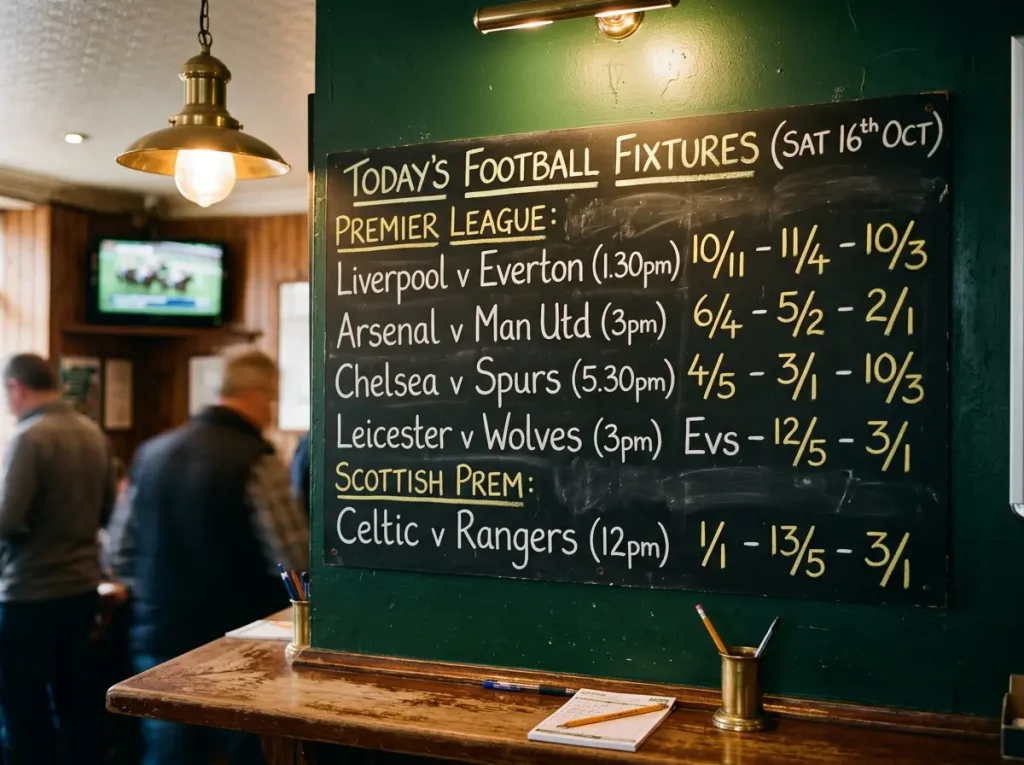
The third edge is the time zone. Yes, it is a disadvantage in one sense — the late kick-offs at 23:00 and 02:00 IST are brutal for anyone with a morning commute. But those late matches also receive less betting volume from European markets, which means the odds are slightly less efficient. A smaller pool of wagers means the bookmaker’s model is less calibrated by market forces, and a sharp individual bettor can find prices that would be corrected instantly during a 15:00 Saturday kick-off in the Premier League.
The cultural context matters too. Ireland’s betting infrastructure is among the most sophisticated in Europe. You have access to every major licensed operator, competitive odds, and a regulatory environment under the new Gambling Regulatory Authority of Ireland that prioritises transparency and deposit limits. Use those tools. Set your deposit limit before the tournament starts. Lock it in. The GRAI’s mandatory deposit-cap system exists precisely for events like a five-week World Cup, where the daily temptation to exceed your budget is constant.
Finally, lean into the neutral’s mindset. Pick a team to follow emotionally — Scotland is the obvious choice — but keep your betting head separate from your supporting heart. The best bet at this World Cup might be against Scotland, and you need to be willing to make it.
The 39-Day Test Starts With a Plan
The 2026 World Cup will be the longest, largest, and most complex betting event in football history. One hundred and four matches across three countries, four time zones, and 39 days of continuous action. The punters who come out ahead will not be the ones who bet the most. They will be the ones who bet with structure.
Set your bankroll. Choose your markets. Respect the new format. Build your accumulators with discipline, not hope. Watch the matches — actually watch them — and let your eyes inform your bets. Track everything. And when the inevitable bad beat arrives on matchday two of the group stage, close the app, make a cup of tea, and remember that the tournament is a marathon with 36 days still to run.
I have covered three World Cup cycles as an analyst, and the single thread connecting every successful tournament bettor I have known is this: they treated the World Cup as a project, not a party. The party is for everyone. The profit is for the prepared. Your edge starts with the odds, but it lives in the process.