
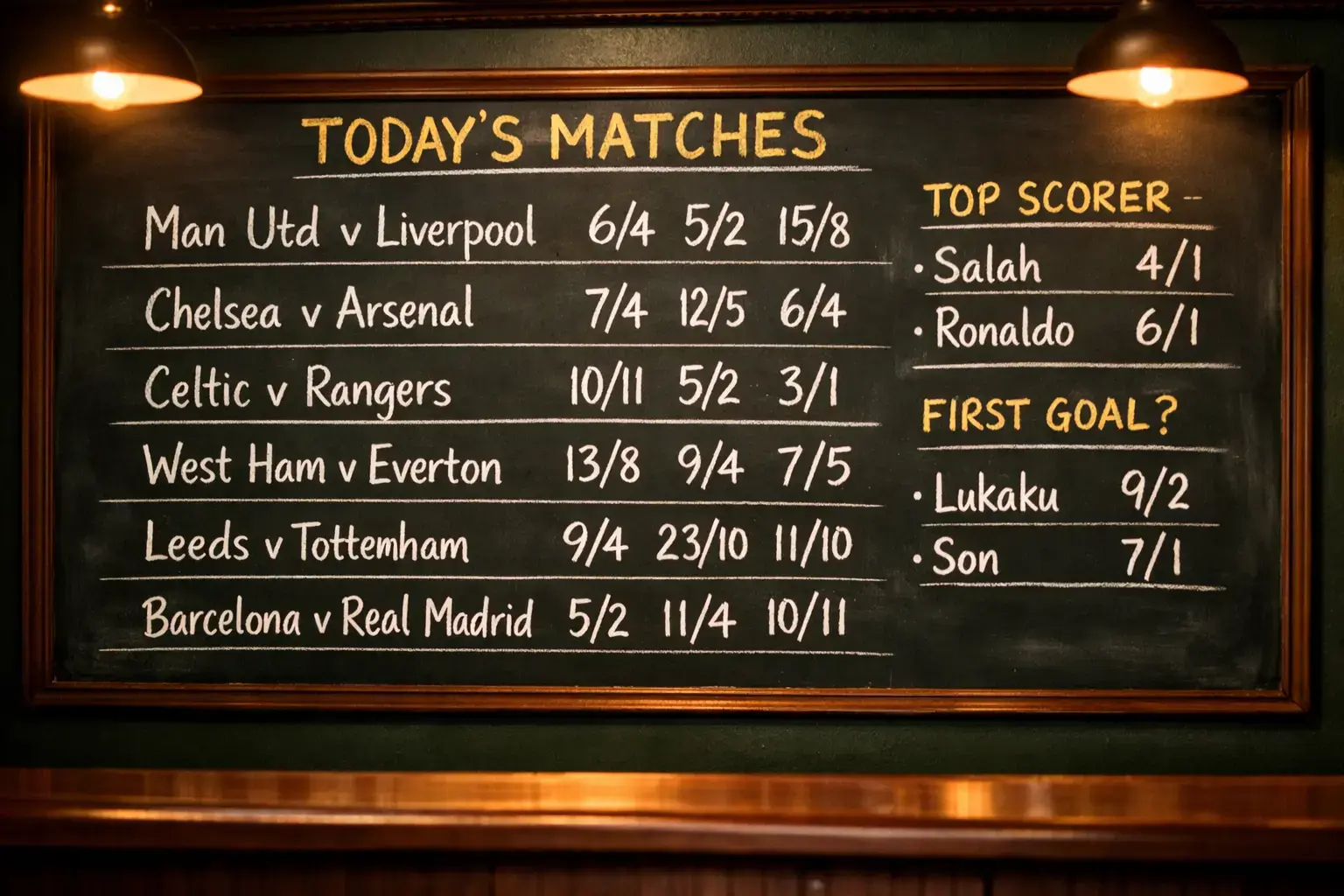
Every subculture speaks its own language, and the overlap between football and betting in Ireland produces a dialect rich enough to confuse anyone who has not spent Saturday afternoons in a bookmaker’s shop or Sunday mornings decoding accumulator slips. This World Cup betting glossary collects every term you will encounter across the 2026 tournament — from the basics that seasoned punters take for granted to the specialist vocabulary that appears only when forty-eight teams and one hundred and four matches create markets most people never knew existed. I have organised them by category, and every definition comes with a 2026 World Cup context because a term without an example is just noise.
Betting Terms (A-Z)
Accumulator (Acca): A single bet combining multiple selections where all must win for the bet to pay out. The odds multiply together, creating large potential returns from small stakes. At the 2026 World Cup, a four-fold acca picking four group-stage match winners could turn EUR 5 into EUR 80 or more — but one wrong result loses the entire stake.
Added Time: See Injury Time. In betting terms, goals scored during added time at the end of each half count towards the full-time result unless the market specifies “90 minutes only.”
Ante-Post: A bet placed well before an event takes place — weeks or months in advance. Outright World Cup winner bets placed now are ante-post wagers, which typically offer better odds but carry the risk of losing your stake if your selection withdraws or is eliminated early.
Asian Handicap: A handicap system that eliminates the draw as an outcome by applying fractional goal advantages. A -0.5 Asian handicap on Brazil means they must win for the bet to succeed. A -1.5 handicap means they must win by two or more goals. Asian handicaps are popular in World Cup group matches where one team is a heavy favourite.
Banker: A selection considered almost certain to win, used as the anchor leg in an accumulator. Brazil to beat Haiti in Group C would be considered a banker by most punters — though the history of World Cup upsets should temper that confidence.
Bankroll: The total amount of money a punter has set aside for betting. Managing your bankroll across the thirty-nine days of the 2026 World Cup is essential — staking too aggressively in the group stage leaves nothing for the knockout rounds when the value bets often emerge.
Both Teams to Score (BTTS): A market where you bet on whether both teams will score in a match, regardless of the final result. World Cup group-stage matches between evenly matched teams — such as Croatia versus Ghana in Group L — often produce BTTS results.
Cash Out: A feature offered by most online bookmakers allowing you to settle a bet before the event concludes, locking in a profit or cutting a loss. If your outright World Cup winner bet is sitting at a profit after the quarter-finals, cashing out secures that profit regardless of what happens next.
Correct Score: A bet on the exact final score of a match. Correct score markets offer high odds — typically 6/1 to 50/1 — because predicting the precise scoreline is inherently difficult. The most commonly backed correct score in World Cup group matches is 1-0.
Dead Heat: When two or more selections tie in a market that has only one winner. In World Cup top scorer betting, if two players finish level on goals, dead heat rules apply and the payout is divided accordingly.
Decimal Odds: An odds format showing the total return per unit staked, including the stake. Decimal 3.00 means a EUR 10 bet returns EUR 30 (EUR 20 profit plus the EUR 10 stake). Increasingly popular among Irish online punters alongside the traditional fractional format.
Double: An accumulator with two selections. Both must win. A double on France to beat Iraq and Argentina to beat Jordan combines two group-stage fixtures into one bet.
Double Chance: A market offering three options: Team A or Draw, Team B or Draw, or Team A or Team B (no draw). Double chance reduces risk and returns compared to a standard match result bet. Backing Scotland or Draw against Brazil in Group C is a double chance selection.
Draw No Bet (DNB): A market where your stake is returned if the match ends in a draw. You only win if your selected team wins, and only lose if they lose. DNB is popular for World Cup matches where a draw is a realistic outcome — such as England versus Croatia.
Drifting: When odds on a selection lengthen (increase), indicating that bookmakers or the market believe the selection is less likely to win. If Argentina’s outright odds drift from 6/1 to 8/1, the market is expressing reduced confidence in their chances.
Each-Way: A bet split into two parts: one on the selection to win and one on it to place (finish in a specified position). In outright World Cup winner markets, each-way typically pays at quarter odds for a top-two or top-four finish, depending on the bookmaker’s terms.
Edge: The advantage a bettor believes they have over the bookmaker’s odds. Finding an edge at the World Cup means identifying situations where the true probability of an outcome is higher than the implied probability of the odds.
Evens: Odds of 1/1 in fractional format or 2.00 in decimal. A EUR 10 bet at evens returns EUR 20 (EUR 10 profit). Evens implies a 50% probability.
First Goalscorer: A bet on which player will score the first goal in a match. If your selected player does not start, most bookmakers void the bet and return the stake. If they start but do not score the first goal, the bet loses.
Fractional Odds: The traditional odds format in Ireland and the UK, expressed as a fraction. Odds of 5/1 mean a EUR 10 bet returns EUR 60 (EUR 50 profit plus the EUR 10 stake). Odds of 1/2 mean a EUR 10 bet returns EUR 15 (EUR 5 profit plus the EUR 10 stake).
Full-Time Result (1X2): The standard match result market with three options: home win (1), draw (X), or away win (2). At the World Cup, where matches are played on neutral ground, “home” and “away” designations are assigned by the draw rather than by geography.
Half-Time/Full-Time: A bet on the result at both half-time and full-time. Nine combinations are possible (home/home, home/draw, home/away, draw/home, etc.). Odds are typically long because both predictions must be correct.
Handicap: A market that applies a virtual advantage or disadvantage to a team. A -1 handicap on Germany means one goal is subtracted from their final score for betting purposes. If Germany win 2-0, the handicap result is 1-0 and the bet wins. Handicaps level the playing field in mismatched World Cup group fixtures.
Hedge: Placing a second bet to reduce risk on an existing wager. If you have an outright bet on Spain at 8/1 and they reach the semi-final, you might hedge by backing their opponent, guaranteeing a profit regardless of the result.
Implied Probability: The probability of an outcome as suggested by the odds. Calculated by dividing 1 by the decimal odds: odds of 4.00 imply a 25% probability. Understanding implied probability is essential for identifying value bets at the World Cup.
In-Play (Live Betting): Betting on a match while it is being played. Odds change in real time based on the score, possession, and match events. In-play betting is particularly popular during World Cup matches with late kick-off times in Ireland, where the quiet intimacy of late-night viewing encourages engagement with live markets.
Juice: See Overround. The bookmaker’s built-in margin on a market.
Lucky 15: A bet consisting of fifteen individual wagers across four selections: four singles, six doubles, four trebles, and one four-fold accumulator. Popular with Irish punters who want multiple chances to win from a single betting slip.
Moneyline: The American equivalent of a match result bet, expressed as positive or negative numbers. Not commonly used in Ireland but may appear on American-facing platforms during the US-hosted World Cup.
Nap: A tipster’s most confident selection of the day. Short for “Napoleon,” the term originates from the card game and is widely used in Irish and British betting culture.
Odds-On: When the potential profit is less than the stake — odds shorter than evens. Odds of 1/3 are odds-on: a EUR 30 bet returns EUR 40 (EUR 10 profit). Odds-on selections are considered highly likely to win.
Outright: A bet on the overall winner of a tournament or competition. The World Cup outright winner market is the most popular long-term market, with bets placed months before the tournament begins.
Overround: The bookmaker’s margin built into the odds on a market. A fair market would total 100% in implied probability; bookmakers set markets at 105–115%, with the excess representing their profit margin. Lower overrounds indicate more competitive odds for punters.
Over/Under: A market based on the total number of goals in a match. Over 2.5 goals wins if three or more goals are scored; under 2.5 wins if two or fewer are scored. The half-goal ensures there is no draw on the bet. World Cup group matches average approximately 2.5 goals historically.
Patent: A bet consisting of seven individual wagers across three selections: three singles, three doubles, and one treble. A safer alternative to a treble accumulator because singles and doubles can still pay out even if one selection loses.
Place: A finishing position within a specified range, used in each-way betting. In World Cup outright markets, “place” typically means finishing in the top two, three, or four depending on the bookmaker.
Punt: An Irish and British colloquial term for a bet. “Having a punt” is the culturally embedded phrase that describes the act of placing a wager, typically in a casual or recreational context.
Punter: A person who places bets. In Irish usage, the term carries no pejorative connotation — it describes anyone from a casual once-a-year bettor to a seasoned professional.
Return: The total amount received from a winning bet, including the original stake. A EUR 10 bet at 3/1 produces a return of EUR 40 (EUR 30 profit plus EUR 10 stake).
Shortening: When odds decrease, indicating increased confidence in a selection. If France’s outright odds shorten from 7/1 to 5/1, the market believes they are more likely to win — possibly due to favourable draw results, injury news from rivals, or strong form.
Single: A bet on one selection in one event. The simplest and most common type of bet.
Stake: The amount of money placed on a bet.
Steaming: When odds shorten rapidly due to heavy betting volume on a selection. Steaming often indicates insider knowledge, strong public sentiment, or a coordinated move by professional punters.
Tipster: A person who provides betting predictions and advice. Quality varies enormously — Irish punters are rightly sceptical of tipsters who promise guaranteed returns, because no such thing exists in betting.
Treble: An accumulator with three selections. All three must win.
Value: A bet where the true probability of an outcome is higher than the implied probability of the odds. Finding value is the fundamental skill that separates profitable punters from recreational bettors over the long term.
Void: A cancelled bet where the stake is returned. Bets can be voided if a match is postponed, a player does not participate (in first goalscorer markets), or specific conditions stated in the terms are not met.
Football Terms
Aggregate: The combined score across two legs of a knockout tie. Not applicable in World Cup knockout rounds, which are decided in a single match, but relevant in qualification playoffs — Ireland lost on aggregate to no one, as the 2026 qualifiers used single-leg playoffs decided on the night.
Box-to-Box: A midfielder who contributes in both defence and attack, covering the full length of the pitch. Declan Rice is the archetypal modern box-to-box midfielder for England at the 2026 World Cup.
Cap: An appearance for a national team. A player with fifty caps has played fifty international matches.
Clean Sheet: A match in which a team does not concede a goal. Morocco’s defensive record — two goals conceded in eight African qualifiers — suggests clean sheets will feature prominently in their Group C matches.
Dead Ball: Any situation where the ball is not in active play — free kicks, corners, throw-ins, penalties. Dead-ball quality varies significantly between World Cup teams and directly affects betting markets like total goals and first goalscorer.
Derby: A match between local or traditional rivals. England versus Scotland qualifies as a derby in the broadest sense, though they are not in the same group at the 2026 World Cup.
Extra Time: Two additional fifteen-minute halves played if a knockout match is level after ninety minutes. Goals scored in extra time count for total goals markets unless otherwise specified.
False Nine: A forward who drops deep into midfield rather than occupying a traditional striker’s position, creating space for wide attackers and midfield runners. Spain’s tactical system at the 2026 World Cup may employ this approach.
Fixture: A scheduled match. The term is standard in British and Irish football terminology.
Group of Death: A World Cup group containing multiple strong teams where qualification is exceptionally difficult. Group C (Brazil, Morocco, Scotland, Haiti) and Group H (Spain, Uruguay, Saudi Arabia, Cabo Verde) are commonly cited as groups of death at the 2026 tournament.
Injury Time: Additional time added at the end of each half to compensate for stoppages. Since the 2022 World Cup, referees have added significantly more injury time — matches regularly extending five to ten minutes beyond the standard forty-five-minute half.
Offside: A player is offside if they are nearer to the opponent’s goal line than both the ball and the second-last opponent when the ball is played to them. Semi-automated offside technology at the 2026 World Cup provides near-instant decisions.
Penalty Shoot-out: A method of deciding knockout matches that remain level after extra time. Each team takes five penalties alternately, followed by sudden death if still level. Ireland’s World Cup 2026 campaign ended in a penalty shoot-out against Czechia in Prague.
Set Piece: Any planned restart of play — corners, free kicks, throw-ins. Set pieces account for approximately 30% of World Cup goals and represent a significant betting angle for teams with specialist dead-ball delivery.
VAR (Video Assistant Referee): A technology system allowing referees to review incidents on a pitchside monitor. VAR checks for goals, penalty decisions, red card incidents, and mistaken identity. Active at the 2026 World Cup across all venues.
Tournament-Specific Terms
Best Third-Placed Teams: Under the 2026 World Cup format, the eight best third-placed teams across twelve groups advance to the round of 32 alongside the twenty-four automatic qualifiers (top two per group). This pathway adds a critical layer of complexity to group-stage betting.
Golden Boot: The award for the top scorer at the World Cup. Shared in the event of a tie, with the player who recorded fewer minutes played taking precedence. The Golden Boot market is one of the most popular outright betting markets alongside the tournament winner.
Golden Glove: The award for the best goalkeeper at the World Cup, based on a combination of clean sheets and overall performance as assessed by FIFA’s technical study group.
Group Winner: The team that finishes first in their World Cup group. Group winner bets are resolved at the end of the group stage, making them shorter-term investments than outright winner bets.
Round of 32: A new knockout round introduced for the 2026 World Cup due to the expanded forty-eight-team format. Thirty-two teams progress from the group stage, and the round of 32 reduces the field to sixteen before the traditional round of 16 format resumes.
Seeding: The process by which teams are ranked and placed into groups to ensure competitive balance. At the 2026 World Cup, seeding was based on the October 2025 FIFA rankings, with the twelve highest-ranked teams receiving top-seed status in the draw.
Third-Place Match: A match between the two losing semi-finalists, played one day before the final. Often produces entertaining, low-pressure football and can offer value in goal-scoring markets.
Watershed: Under Irish broadcasting regulations, gambling advertising is prohibited between 5:30am and 9:00pm. This “watershed” rule was introduced by the Gambling Regulation Act 2024 and affects how bookmakers promote World Cup betting offers in Ireland.
This World Cup betting glossary covers the core vocabulary you will encounter across the 2026 tournament. For the strategic application of these terms — how to use handicaps, build accumulators, and identify value in outright markets — the complete World Cup 2026 betting guide translates the language into action.