
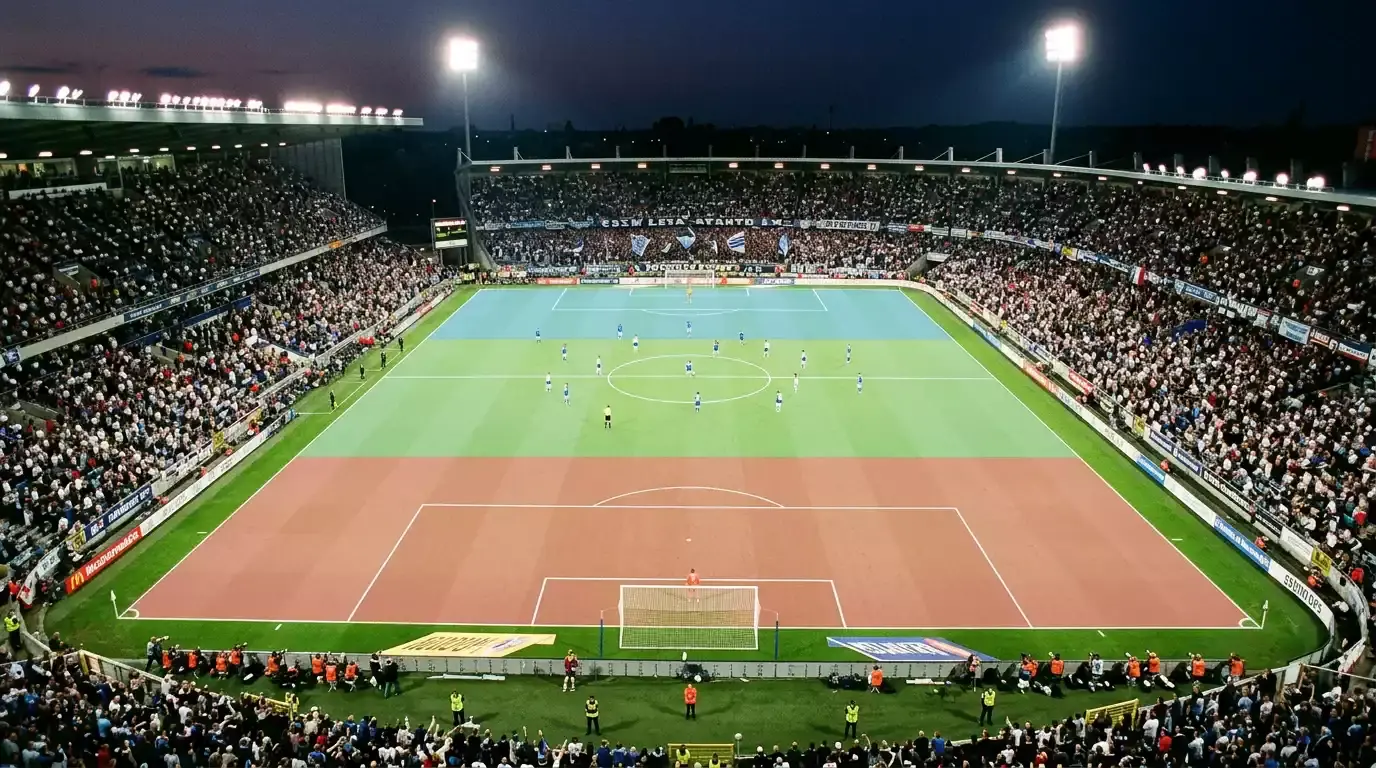
The days of walking into a Paddy Power shop and putting a tenner on Brazil to beat someone are not over — but they are just the beginning. The number of World Cup betting markets available to an Irish punter in 2026 is staggering compared to what existed even a decade ago. Match result, Asian handicaps, both teams to score, player props, corner totals, booking points, half-time/full-time doubles, anytime goalscorer, exact score — and that is just for a single fixture. Multiply those options across 104 matches and you begin to understand why the World Cup is the deepest, most liquid betting event in sport.
I have spent nine years breaking down these markets for a living, and the single most valuable skill I have developed is knowing which market to use for which situation. The punter who bets match result on every game is leaving money on the table. The punter who understands that a handicap bet on France versus Iraq offers better value than a straight win bet — because the market prices France’s winning margin, not just the binary outcome — has an edge that compounds across a tournament with this many fixtures.
Match Result and Double Chance: The Classics
England versus Ghana, Group L. You fancy England to win. You look at the match result market: England at 1/4, the draw at 5/1, Ghana at 12/1. England at 1/4 returns twenty-five euro on a hundred-euro stake. Is that worth it? That is the question every punter faces with the match result market, and the answer depends entirely on how you assess the risk of a draw.
The match result market — also called 1X2 — is the oldest and most straightforward betting market in football. You pick one of three outcomes: home win, draw, or away win. At World Cups, this market carries a specific quirk that league football does not: the draw rate is historically higher in international tournaments than in domestic leagues. Between 2002 and 2022, approximately 22% of World Cup group-stage matches ended in draws, compared to around 25% in the knockout stages when counting matches after 90 minutes. That elevated draw rate means backing heavy favourites in the 1X2 market often delivers poor value relative to the risk involved.
This is where double chance becomes the more sophisticated choice. Double chance allows you to cover two of the three outcomes in a single bet: home win or draw (1X), away win or draw (X2), or home win or away win (12). The odds are shorter because you are covering more probability, but the strike rate is significantly higher. If you rate England as likely to beat Ghana but acknowledge the 20-odd percent chance of a draw, backing England on double chance — 1X — costs you very little in terms of reduced odds while eliminating the most common way a favourite loses value in a World Cup match.
I use double chance most frequently in the first round of group matches. Teams are cautious in their opening fixture. Managers prioritise not losing over chasing a dominant win. The draw rate in World Cup opening group matches is historically even higher than the tournament average, which makes double chance on the favourite a smarter play than the straight match result. By the second and third group matches — when teams know their qualification situation and must push for results — the match result market becomes more attractive because the tactical context creates more decisive outcomes.
One tactical note: the draw no bet market is an alternative to double chance that works slightly differently. Draw no bet removes the draw entirely — if the match ends level, your stake is returned. It is functionally equivalent to backing the favourite to win with insurance against a draw, and the odds sit between the match result price and the double chance price. For group-stage matches where you rate the favourite strongly but want protection against the draw, draw no bet often offers the best balance of value and safety.
Handicaps and Over/Under: Where the Smart Money Goes
When Saudi Arabia beat Argentina 2-1 in the 2022 World Cup, every match result bet on Argentina went up in smoke. But punters who had taken Argentina -1.5 on the Asian handicap lost on a different level entirely — they needed Argentina to win by two goals, and the Saudis did not just avoid a two-goal defeat, they won the match outright. That result illustrates both the risk and the reward of handicap betting: you are predicting not just who wins, but by how much.
Asian handicaps work by applying a goal advantage or deficit to one side before kick-off. If you back France -1.5 against Iraq, France need to win by two or more goals for your bet to land. The odds on France -1.5 are significantly better than the odds on France to simply win, because you are taking on additional risk. In mismatches — and the 2026 World Cup will have plenty of mismatches in the group stage — Asian handicaps offer the best route to meaningful returns on favourites. Backing Germany to beat Curaçao at 1/7 on the match result is not worth the risk relative to the return. Backing Germany -2.5 at even money transforms the same fixture into an interesting proposition.
European handicaps work similarly but include the possibility of a draw on the handicap line. If you back France -1 on a European handicap and France win 1-0, the result after the handicap is applied is a draw — and you lose. Asian handicaps solve this problem by using half-goal and quarter-goal lines that eliminate the draw. For World Cup betting, I almost always prefer Asian handicaps to European handicaps because the extra precision of the half-goal lines makes the bet cleaner and easier to assess.
Over/under goals is the market that I believe offers the most consistent value at a World Cup. You are betting on whether the total goals in a match will be above or below a set line — typically 2.5, though 1.5 and 3.5 lines are also available. The beauty of this market is that it removes the need to pick a winner entirely. You are assessing the tempo, the tactical setup, and the quality gap between the two sides. A match between Brazil and Haiti will almost certainly produce goals regardless of who scores them. A match between Uruguay and Saudi Arabia might produce very few goals because both sides are likely to prioritise defensive structure. Those assessments are more reliable than predicting a winner, especially in the early stages of the tournament when form data is limited.
The 2026 World Cup’s expanded format should push goal averages higher in the group stage than previous tournaments. More mismatches between top seeds and debutants means more blowouts, which inflates the overall goals-per-game average. I would expect the group-stage average to land around 2.7 to 2.9 goals per match, compared to the 2.6 average across the 2018 and 2022 tournaments. That shift makes over 2.5 goals a slightly more favourable bet than historical data alone would suggest.
Outright, Top Scorer, and Special Markets
Most punters place their outright bet on the tournament winner and move on. That is fine, but it ignores the richest vein of value in World Cup betting: the peripheral outright markets that the bookmakers price with less precision than the headline winner market.
Group winner markets are where I start. Predicting which team tops each of the twelve groups is a more contained exercise than predicting the overall winner, and the odds often reflect lazy assumptions rather than careful analysis. Take Group C: Brazil are priced as heavy favourites to top the group, but Morocco — who topped a group containing Belgium and Croatia in 2022 — are available at attractive odds to finish first. The bookmakers know Morocco are strong, but the pricing on group winner markets is driven partly by name recognition and partly by the assumption that South American and European giants will always finish top. History disagrees.
Top scorer markets — the Golden Boot — are another area where careful analysis outperforms gut instinct. The Golden Boot winner at a World Cup is almost always a player whose team reaches the semi-finals or final, because the additional matches create more scoring opportunities. That means your top scorer bet is effectively a two-part prediction: which teams go deepest, and which player within those teams is most likely to accumulate goals? Penalty takers have an inherent advantage in this market because knockout matches that go to extra time and penalties generate additional goal-scoring opportunities that open-play attackers do not benefit from.
Special markets — sometimes called novelty bets — cover everything from the exact score of the final to which group produces the most goals to whether a specific player will score a hat-trick during the tournament. These markets are priced with wider margins than the core markets because the bookmakers know casual punters are attracted to high-odds propositions without carefully assessing the underlying probability. My advice: use special markets for entertainment and small stakes, not for serious bankroll allocation. The edges are harder to find, the variance is higher, and the liquidity is lower — meaning the odds can shift unfavourably before you can get your money on.
In-Play Betting: The World Cup’s Late-Night Companion
It is 11:45pm on a Thursday night in Dublin. Brazil and Scotland are 0-0 at half-time in Group C. The pre-match odds had Brazil at 2/5 — far too short to be interesting. But now, with forty-five minutes played and no goals scored, the live odds on Brazil to win have drifted to 4/6. Scotland’s double chance — draw or win — has shortened from 7/4 to 11/10. The match is still goalless, but the market has shifted because the first half told a story that the pre-match odds did not anticipate. This is in-play betting, and the World Cup’s late-night IST kick-offs are tailor-made for it.
In-play markets update continuously during the match, reflecting the current state of play. Goals, red cards, substitutions, and even momentum shifts cause odds to move in real time. The advantage for a knowledgeable punter is that you can watch the match, read the tactical pattern, and place a bet based on information that the pre-match market could not account for. If Scotland are defending resolutely and Brazil look frustrated, backing under 1.5 goals at half-time in a match that started at over 2.5 on the pre-match market can be a high-value play.
The danger of in-play betting at a World Cup is the emotional environment. Late-night matches, a few drinks, the adrenaline of watching live football — all of these factors push punters toward impulsive decisions. I have seen seasoned analysts make terrible in-play bets at 1am because the emotional intensity of a World Cup match overwhelmed their analytical discipline. My rule is simple: set a specific in-play budget for each match before kick-off, and do not exceed it regardless of what happens on the pitch. The market will be there tomorrow. Your bankroll might not be if you chase losses at two in the morning.
For Irish punters specifically, in-play betting will be the dominant way many people interact with the 2026 World Cup’s betting markets. The kick-off times — 17:00, 20:00, 23:00, and 02:00 IST — mean that the late matches are perfect for in-play engagement from the sofa. The early matches coincide with the end of the working day, making pre-match bets more practical. Understanding which market to use in-play versus pre-match is a skill that separates profitable punters from those who simply add excitement to their viewing experience.
Which Market for Which Stage? A Punter’s Timeline
Not all markets work equally well at every stage of the tournament, and the punter who adjusts their approach as the World Cup progresses will outperform the one who uses the same market from start to finish.
During the opening round of group matches — matchday one of each group — double chance and over/under markets offer the best value. Teams are cautious, draws are common, and the quality gap between top seeds and pot-four sides often produces goals. I would avoid handicap betting in the opening round because the uncertainty is at its highest — teams have not yet revealed their tactical hand, and managers often adopt conservative setups to avoid an early defeat.
By the second round of group matches, the picture clarifies. Teams that lost their opener need to push for a result, which opens up handicap markets on the now-desperate side. Asian handicap on the favourite becomes attractive because the losing team will play a more open game, creating space for the stronger side to exploit. Over 2.5 goals also becomes more reliable in second-round matches because the tactical context rewards aggression.
The final round of group matches is the most unpredictable, and my recommendation is to reduce your betting volume rather than increase it. Simultaneous kick-offs, complex qualification scenarios, and teams rotating squads create outcomes that no model can reliably predict. If you must bet, in-play is the only sensible approach — wait until the shape of the qualification picture becomes clear, then act on the live odds.
The round of 32 rewards the same markets as the group stage opener: double chance and draw no bet on the favourite. Knockout football introduces the pressure factor, and lower-ranked teams frequently raise their performance to a level the market does not expect. Backing France to beat a third-placed qualifier outright at 1/5 offers no value. Backing France on draw no bet or combining France with under 3.5 goals in a bet builder offers a much more intelligent approach.
From the quarter-finals onward, I shift almost entirely to “to qualify” markets and BTTS. The margins between remaining teams are slim, extra time and penalties are frequent, and the match result market becomes essentially a coin flip at the short end. “To qualify” captures the outcome that matters — who progresses — without requiring you to predict whether the match ends in 90 minutes or 120. Combined with BTTS, which strikes at over 60% in late-stage World Cup knockout matches, you can build a small-stake bet builder that captures the dynamic of a close, high-quality game without exposing yourself to the variance of a straight result bet.
The World Cup betting markets for 2026 offer more opportunities than any previous tournament. The key — as with everything in this game — is matching the right tool to the right job. The market that wins you money in the group stage will lose you money in the semi-finals. The approach that works for a mismatch will fail in a rivalry. Adapt your betting approach as the tournament evolves, and the markets will reward you.