
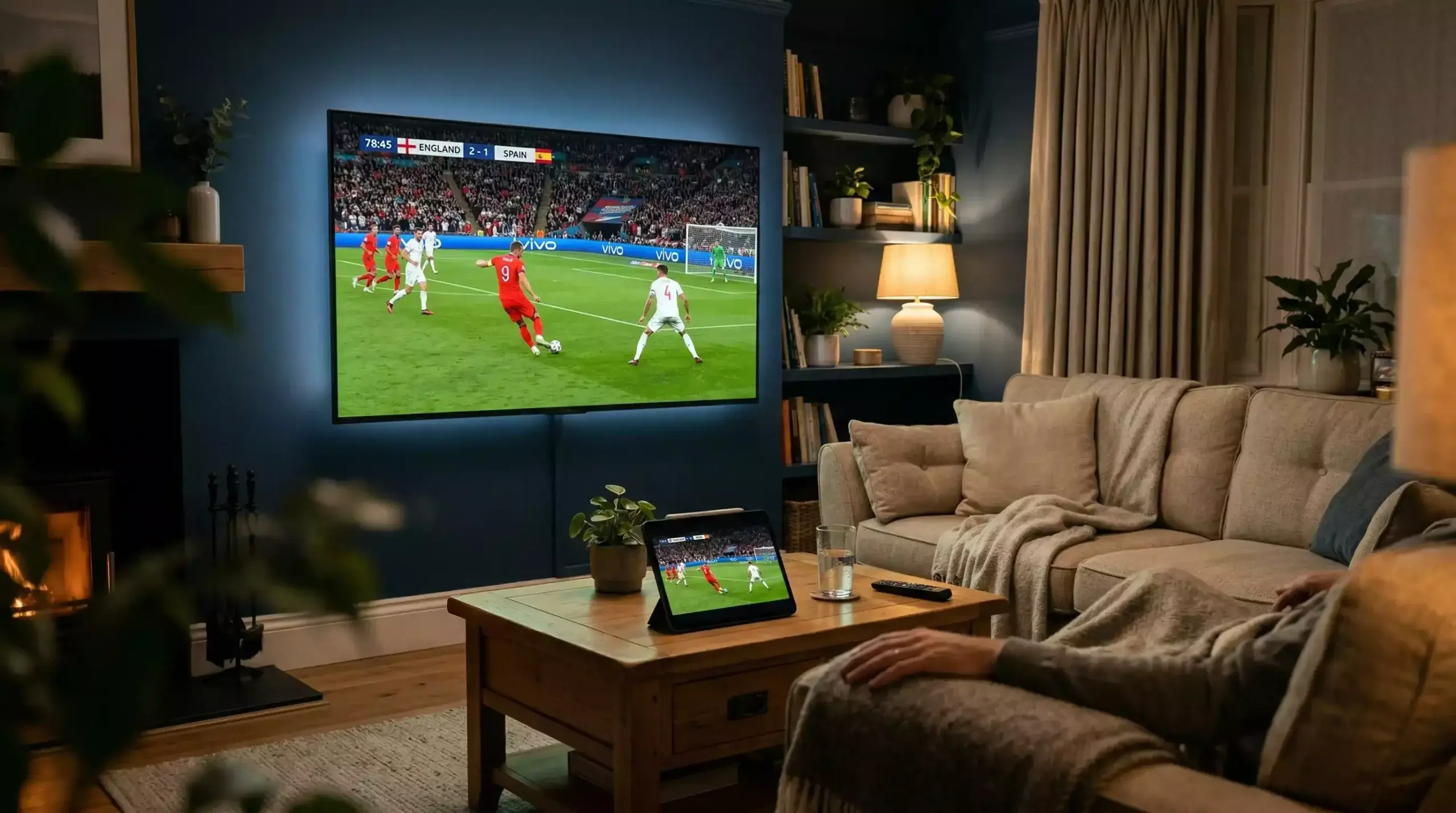
The matches start late. The pints pour regardless. That has been the reality of watching major football tournaments from Ireland for as long as I can remember, and the 2026 World Cup — hosted across the United States, Mexico, and Canada — will push the late-night viewing to its absolute limit. With kick-off times ranging from 17:00 IST for the earliest fixtures to 02:00 IST for the latest, watching every match live is a physical impossibility unless you are independently wealthy or permanently unemployed. The smart Irish football fan needs a strategy: which matches to watch live, where to watch them, and how to survive 39 days of football without destroying your sleep, your relationships, or your productivity.
TV Coverage: RTÉ, Virgin Media, and What’s Confirmed
RTÉ remains the anchor of World Cup coverage in Ireland, and the national broadcaster has been the home of tournament football for decades. For Irish viewers, RTÉ’s coverage is more than a broadcast — it is a communal experience, complete with studio analysis that ranges from insightful to entertainingly chaotic, and the kind of familiarity that makes watching football at home feel like being in the pub. RTÉ’s commitment to free-to-air World Cup coverage means that every Irish household with a television can access the tournament without a subscription, which is particularly important for a World Cup where Ireland are not participating and the appetite for matches is driven by neutral interest rather than national obligation.
The broadcast rights landscape for World Cup 2026 in Ireland is shaped by EU regulations that designate the World Cup as a “listed event” — meaning that key matches, including the opening match, semi-finals, and final, must be available on free-to-air television. RTÉ has historically shared coverage with Virgin Media (formerly TV3), with both broadcasters showing different group-stage matches and taking turns with the knockout rounds. The precise split of fixtures between RTÉ and Virgin Media for 2026 will be confirmed closer to the tournament, but Irish fans can expect comprehensive free-to-air coverage of every stage.
The quality of the studio analysis matters for a tournament where you are watching as a neutral. RTÉ’s panel discussions — often featuring former Irish internationals and guest analysts — provide context that enhances the viewing experience, particularly for the less familiar teams. When Haiti play their first World Cup match in over 50 years, or when Curaçao take on Germany, the story behind the result needs to be told, and RTÉ’s long-form studio coverage does this better than most international broadcasters. The pre-match analysis for late-night fixtures will be especially valuable, as Irish viewers tuning in at 23:00 IST will need context for matches they might not have followed in the build-up.
Virgin Media’s coverage typically complements RTÉ’s with a slightly different editorial approach — more focused on the Premier League connections, the betting angles, and the tactical analysis that appeals to the more football-obsessed end of the audience. Between the two broadcasters, every group-stage match and every knockout fixture should be available on free-to-air Irish television, which is a luxury that many countries do not enjoy.
Streaming: How to Watch on the Go
The RTÉ Player will stream all RTÉ-broadcast matches live, which means any match shown on RTÉ television will also be available on your phone, tablet, or laptop. The streaming quality has improved significantly in recent years, and the RTÉ Player app is available on all major platforms — iOS, Android, smart TVs, and web browsers. For the 17:00 and 20:00 IST kick-offs that coincide with commuting or early evening plans, the RTÉ Player is the most practical way to watch without being tied to a television screen.
Virgin Media’s streaming platform, Virgin Media Player, offers the same service for their share of the broadcast rights. Both platforms are free to use with an Irish IP address, which means there is no subscription cost beyond your existing broadband or mobile data connection. The convenience of dual-platform streaming means that no matter which broadcaster has the rights to a specific match, you can access it on your device without switching between paid services.
For matches not covered by Irish broadcasters — or for viewers who want access to alternative commentary and analysis — international streaming options exist. The BBC’s iPlayer is accessible with a VPN, though the legal and ethical considerations of using a VPN to circumvent geographic restrictions are a matter of personal judgment. ITV in the UK will also carry World Cup coverage, and their streaming platform, ITVX, is another option for viewers near the border or with UK accounts. The key consideration for any streaming option is latency: live sports streams typically lag 15 to 45 seconds behind the television broadcast, which matters if you are following in-play betting markets where odds shift in real time.
Pub Screenings: The Real Irish World Cup Experience
There is no better place to watch a World Cup match than an Irish pub. That is not patriotic sentiment — it is an objective assessment of atmosphere, beer quality, and collective emotional investment. A pub full of Irish neutrals watching Scotland play Brazil at midnight is an experience that no living room, no matter how impressive the television, can replicate. The collective groan when a chance goes wide, the roar when an underdog scores, the immediate tactical analysis from the person next to you who has never coached a football match but is absolutely certain that Scotland need to push their wing-backs higher — this is what makes the World Cup special for a nation that is not in it.
The challenge for pub viewing in 2026 is the timing. The 17:00 and 20:00 IST fixtures are perfect pub matches — early enough to arrive after work, late enough that the evening stretches ahead of you. The 23:00 IST fixtures are manageable for weekend matches but tricky on a school night, and many pubs outside Dublin and the larger cities will close before the final whistle of a match that kicks off at 23:00. The 02:00 IST fixtures are pub-killers for most of the country — only the most dedicated late-night venues in Dublin, Cork, Galway, and Limerick will stay open for a 02:00 kick-off, and even those may only do so for the biggest matches in the knockout rounds.
My advice: identify your pub early. The venues that commit to extended hours for World Cup viewing will announce their plans in the weeks before the tournament. Dublin’s city centre pubs — particularly those around Temple Bar, Camden Street, and Baggot Street — have a long tradition of World Cup late-night openings. Cork’s Oliver Plunkett Street and Galway’s Quay Street are reliable options outside the capital. If you are in a smaller town, the local GAA or rugby club may organise screenings that extend beyond normal pub hours, particularly for the knockout rounds and the Scotland fixtures that will draw massive Irish interest.
One practical note: pub screenings of late-night matches tend to get louder and more emotional as the evening progresses, which is wonderful for atmosphere but occasionally problematic for concentration. If you are watching a match with a genuine betting interest — following the in-play markets, tracking a specific result that affects your accumulator — the pub might not be the ideal environment. Save the pub for the big occasion matches and the fixtures where the atmosphere is the point. Save the sofa for the matches where your money is on the line and you need to concentrate.
Surviving the Late Kick-Offs: An Irish Punter’s Survival Guide
Thirty-nine days. Up to four matches per day. Kick-offs that stretch from 17:00 to 02:00 IST. The 2026 World Cup is an endurance event for the viewer as much as it is for the players, and the Irish fan who tries to watch everything will be a hollow, sleep-deprived shell by the time the quarter-finals arrive. The key to surviving — and enjoying — the tournament is selectivity.
During the group stage, I recommend a tiered approach. Tier one: must-watch live, regardless of kick-off time. This includes Scotland’s three group matches, the opening match (Mexico versus South Africa), and any fixture involving a team you have adopted as your neutral’s choice. Tier two: watch live if the timing works, record if it does not. This includes England’s matches, the marquee group fixtures (Brazil versus Morocco, France versus Senegal, Argentina versus Austria), and any match with significant betting implications for your active bets. Tier three: catch the highlights the next morning. This covers the majority of group matches involving teams outside your sphere of interest — important for staying informed, but not worth sacrificing sleep.
The knockout rounds change the calculus. Every match matters, the quality is higher, and the drama is more intense. From the round of 32 onward, I would shift to watching every match live that kicks off at 23:00 IST or earlier, and recording the 02:00 IST matches for the following morning unless they involve the last eight or later. The semi-finals and final will almost certainly kick off at prime-time Eastern US hours — which translates to 01:00 or 02:00 IST — and those are non-negotiable late nights regardless of what day of the week they fall on.
Physical survival tips from someone who has watched three World Cups at anti-social hours: caffeine before 23:00 only, because coffee after midnight disrupts the sleep you will eventually need. A proper meal before the late match, because watching football on an empty stomach leads to bad snacking decisions at 1am. And a firm rule about alcohol: one or two drinks for atmosphere, but the punter who is five pints deep at 02:00 IST makes terrible in-play betting decisions and feels even worse the next morning. The World Cup schedule in Irish time is a marathon, not a sprint, and the viewers who pace themselves will enjoy the final more than the ones who burned out in the group stage.