
Loading...
Argentina were 14/1 before the 2022 World Cup. They won it. Croatia were 33/1 in 2018. They reached the final. Greece were 150/1 at Euro 2004. They lifted the trophy. The odds tell you what the market thinks will happen. They do not tell you what will happen. That distinction is worth a fortune if you understand it.
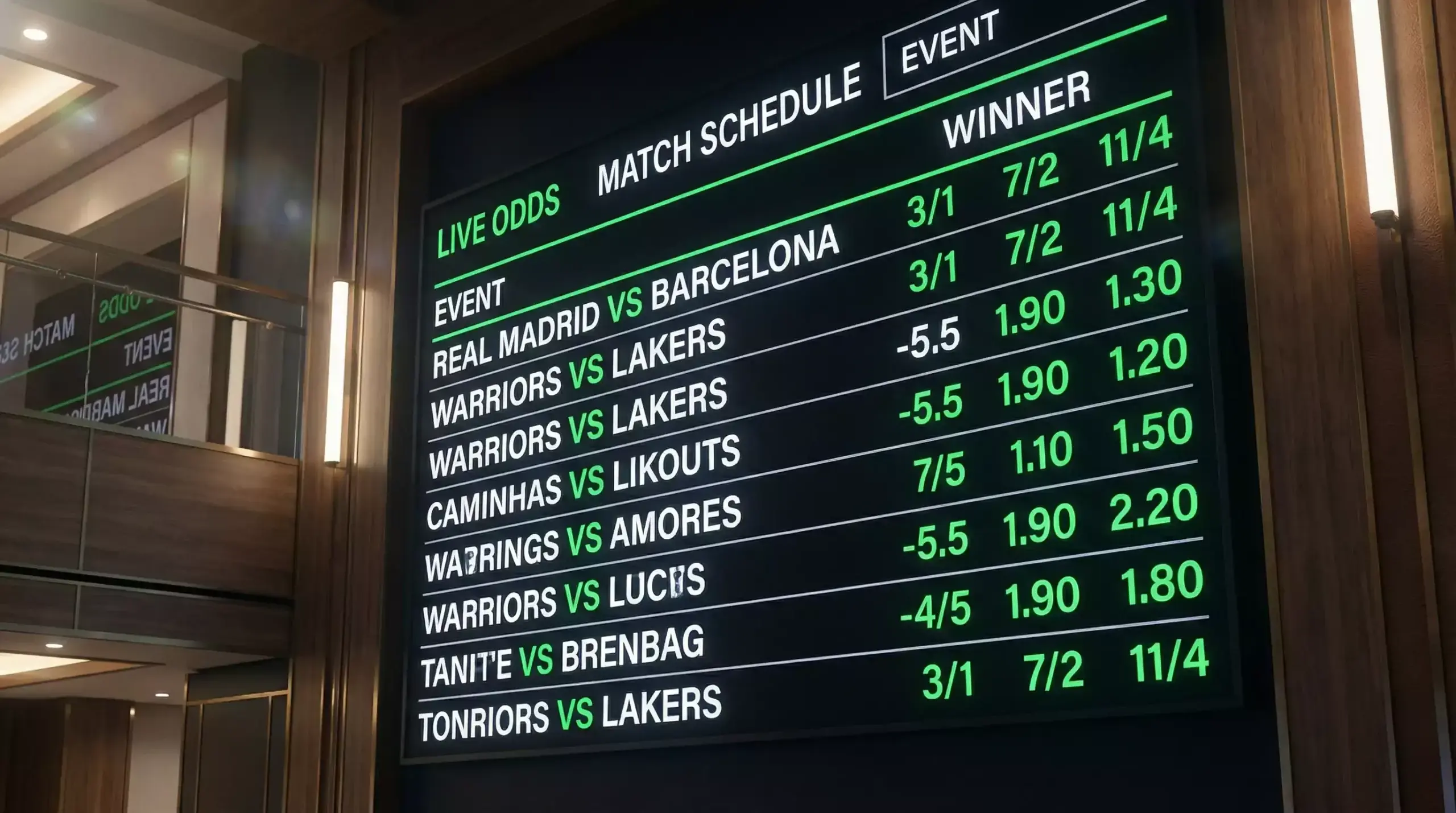
The World Cup 2026 odds market opened in earnest the morning after the draw in Zürich, and it has been churning ever since. Every friendly result, every injury bulletin, every tactical tweak filters into the numbers. As I write this in April 2026, with the tournament two months away, the outright market has settled into a shape that reflects genuine analytical consensus — but also contains exploitable assumptions about squad depth, draw difficulty, and the impact of an expanded 48-team format that no one has seen before.
What follows is not a list of numbers. It is a story told through prices — what the market believes, where it might be wrong, and where an Irish punter with clear eyes and no patriotic bias can find an edge. I have spent nine years reading odds boards for a living, and this World Cup’s market is the most open, most uncertain, and most interesting I have covered. The favourite is not obvious. The value is hiding in plain sight. And the right bet, placed at the right time, could make your summer.
Outright Winner Odds: The Full Picture
There is no clear favourite for the 2026 World Cup. That sentence alone should get your attention. At every World Cup since 2006, at least one team has been priced at 7/2 or shorter. This time, the market leader sits around 9/2, and three other teams are within touching distance. The last time the outright market was this open was 2002, when Brazil came from 7/1 to win the whole thing. Open markets produce open value.
Argentina head the betting at approximately 9/2 (5.50 decimal). That price implies a 18% probability of winning the tournament. As defending champions, they carry the pedigree and the tactical identity that Lionel Scaloni built over five years. But this is post-Messi Argentina. Whether he is in the squad at 38 or not, the team’s creative heartbeat has slowed. Angel Di Maria has retired from international duty. The midfield axis of Enzo Fernandez and Alexis Mac Allister is genuinely world-class, but the forward line lacks the x-factor that Messi provided in Qatar. My assessment: 9/2 is about right. Not a value bet, not an avoid — just the market doing its job.
France sit at roughly 5/1 (6.00 decimal), implying a 17% chance. Two consecutive World Cup finals — a win in 2018, a narrow loss in 2022 — give them a tournament pedigree that no other nation can match right now. Kylian Mbappé, now 27 and in his prime years, will be the face of this World Cup. The squad depth is absurd: even without injuries, France have genuine options in every position. The concern is historical. No team has won back-to-back World Cups since Brazil in 1958 and 1962, and no team has won a World Cup immediately after losing a final since 1950. The “bounce back from final loss” record is poor. At 5/1, the price accounts for the talent but perhaps not for the psychological weight of Qatar’s defeat.
Brazil are priced around 6/1 (7.00 decimal). This is Brazil’s longest World Cup drought in history — they last won in 2002, a gap of 24 years by the time the 2026 final is played. The new generation of Vinícius Júnior, Rodrygo, and Endrick represents a genuine attacking threat, and the defensive solidity that Dorival Júnior has instilled since taking over is a marked improvement on the chaos of the 2022 campaign. Brazil’s issue is the group. Group C pairs them with Morocco (2022 semi-finalists), Scotland (organised and dangerous), and Haiti (unpredictable debutants). It is not the easiest group for a team expected to cruise, and a difficult group-stage run drains energy that other favourites in softer groups will preserve. At 6/1, Brazil represent marginal value if you believe in the attacking talent. I do, but with reservations.
England sit around 8/1 (9.00 decimal). The talent pool is the deepest in English football history — Jude Bellingham, Phil Foden, Bukayo Saka, Declan Rice, Trent Alexander-Arnold — but the tournament record remains a source of anxiety for English bettors and amusement for Irish ones. England have reached the semi-finals or final in three of the last four major tournaments without winning any of them. The pattern of late-tournament collapse, or at least late-tournament stiffness, is a genuine concern. Group L (Croatia, Panama, Ghana) is navigable but not trivial, and a semi-final or final meeting with France or Argentina would test whether this generation can cross the finishing line. At 8/1, England are good value only if you believe the manager has solved the big-game tactical conservatism that has defined recent tournaments.
Spain also sit around 8/1. After winning Euro 2024 with one of the youngest squads in European Championship history, Spain enter the World Cup with momentum and a tactical identity that is both modern and devastating. Lamine Yamal, still only 18, plays football with the certainty of a 30-year-old. Pedri and Gavi control midfield tempo in a way that echoes the 2010 generation but with more directness. The concern is World Cup-specific: Spain’s post-2010 World Cup record is awful. Group exits in 2014 and 2022, a round-of-16 penalty defeat in 2018. Euro success has not translated to World Cup success in over a decade. At 8/1, the price reflects the talent but perhaps not the tournament-specific risk.
Germany at 12/1 are the first team on the board where I see genuine value. Two consecutive group-stage exits (2018 and 2022) have pushed Germany’s price out to levels unseen since the late 1990s. But the home Euros in 2024 — where Germany played some of the best football of the year before losing to Spain in the quarter-finals — showed that the talent and tactical structure are there. Florian Wirtz, Jamal Musiala, and Kai Havertz form an attacking triangle that can dismantle any defence. Group E (Ecuador, Côte d’Ivoire, Curaçao) is kind. If Germany enter the knockout rounds with confidence, 12/1 looks generous. This is where I have placed my own outright interest.

Beyond the top six, the market thins quickly. Netherlands at 16/1, Portugal at 16/1, Belgium at 25/1. These teams have the quality to reach the quarter-finals but face structural questions — Netherlands have never won a World Cup despite three finals, Portugal are navigating the post-Ronaldo transition, and Belgium’s golden generation has aged past its peak. At their prices, they are not outright bets for me. They are “to reach the semi-finals” candidates at best.
Dark Horses Worth a Punt
Morocco reached the semi-finals in 2022 priced at 100/1. Anyone who backed them made a return that most professional traders would envy over a career. The dark horse market is where World Cup betting fortunes are made — but only if you can distinguish between a team that genuinely overperforms its odds and one that simply has a nice narrative.
Morocco themselves are no longer a dark horse — they are priced around 25/1 to 33/1, reflecting their 2022 pedigree and a squad that has maintained its defensive excellence. In Group C with Brazil, Scotland, and Haiti, Morocco’s path to the knockout rounds is credible, and their route through the bracket could avoid the top seeds until the quarter-finals depending on how the groups fall. At 25/1, they are worth a small outright stake. At 33/1, they are worth a bigger one. The Atlas Lions defend deep, counterattack with precision, and have tournament experience that most teams at their price point lack.
Colombia at 33/1 to 40/1 are the South American dark horse I keep circling back to. They went on a 28-match unbeaten run in qualifying that included wins over Argentina and Brazil. The midfield of James Rodríguez — still pulling strings at 34 — and a younger generation led by Luis Díaz and Jhon Durán is both creative and physically imposing. Colombia’s weakness is depth: injuries to one or two key players could hollow out the squad. But at 40/1, you are not paying for consistency. You are paying for the possibility that everything clicks for five matches, and Colombian football has a history of precisely that kind of explosive, all-or-nothing tournament run.
Japan at 40/1 deserve serious consideration. The squad is packed with European-based players — Takefusa Kubo at Real Sociedad, Kaoru Mitoma at Brighton, Wataru Endo at Liverpool — and the team’s pressing structure under Hajime Moriyasu is among the most disciplined in international football. Japan beat Germany and Spain in the 2022 group stage. Those were not flukes; they were the product of a system that exploits transitions against possession-dominant teams. Group F (Netherlands, Tunisia, Sweden) is competitive but winnable, and Japan’s style of play is tailor-made for knockout upsets. At 40/1, they are the longest-priced team I would seriously consider for an outright each-way bet.
Turkey at 50/1 to 66/1 are the wildcard. A generation of players who grew up in the Bundesliga and Premier League — Arda Güler at Real Madrid, Kenan Yıldız at Juventus, Ferdi Kadıoğlu at Brighton — gives Turkey an attacking talent base that was unthinkable five years ago. In Group D with the USA, Australia, and Paraguay, Turkey have a realistic path to the round of 32, and once you are in the knockouts, anything is possible. The 50/1 price reflects the fact that Turkey have not been past the quarter-finals since their stunning third-place finish in 2002. But this squad is better than anything Turkey have produced since then, and the price is long enough to justify a speculative punt.
Uruguay at 33/1 complete my dark horse shortlist. Two-time World Cup winners, a ruthless competitive culture, and a squad that blends experienced heads like Federico Valverde with emerging forwards in the Darwin Núñez mould. Group H pairs them with Spain, Saudi Arabia, and Cabo Verde — a tough draw with Spain, but second place is very achievable. Uruguay’s tournament ceiling is the semi-finals, and at 33/1 you are getting a semi-final calibre team at a round-of-16 price.
Group Winner Odds — All 12 Groups
If outright betting is a five-week commitment, group winner markets are a sprint — three matches, results within ten days, and a resolution that does not require your team to survive a penalty shootout in the quarter-finals. These are the markets where detailed knowledge of each group’s dynamics converts into tangible returns, and the 12-group format at this World Cup means there are twice as many groups to analyse as a standard tournament.
Group A (Mexico, South Korea, South Africa, Czechia) opens the tournament, and Mexico’s status as hosts and opening-match participants makes them the clear favourite at roughly 4/6. South Korea at 3/1 are the value play here. Korean football has invested heavily in European development pathways, and a squad featuring Son Heung-min plus a generation of Bundesliga and Premier League players is genuine group-winner material. Mexico’s home advantage is real but potentially offset by the pressure of opening the tournament at the Azteca. I lean toward South Korea offering better value than their price suggests.
Group B (Canada, Switzerland, Qatar, Bosnia and Herzegovina) is one of the most even groups in the draw. Switzerland at around 6/4 are the narrow market favourite, and that price looks about right. Canada at 2/1 are interesting as co-hosts playing in Toronto and potentially Vancouver, but the squad lacks depth. This is a group to target for draw bets in individual matches rather than a group-winner stake — the margins are too tight to back anyone with confidence.
Group C (Brazil, Morocco, Scotland, Haiti) is the group every Irish punter will follow. Brazil are the favourites at roughly 4/9 to top the group, but that price is too short for my liking. Morocco’s 2022 pedigree makes them a genuine threat to finish first, and Scotland under Steve Clarke are capable of grinding out results that upset the expected order. Morocco at 7/2 to win the group is my pick — they have the defensive structure to beat anyone on their day, and Brazil’s inconsistency in recent years makes a group-stage stumble entirely plausible.
Group D (USA, Australia, Paraguay, Turkey) features the primary host nation. The USA at around 4/5 are favoured but not dominant. Turkey at 5/2 offer genuine value given the quality of their squad, and any group featuring a host nation carries the risk of referee bias — not deliberate, but the subtle influence of 80,000 home fans does affect marginal decisions. I like Turkey each-way in this group at the current price.
Group E (Germany, Ecuador, Côte d’Ivoire, Curaçao) is Germany’s to lose, and they are priced accordingly at 1/3. At that price there is no value in backing Germany to top the group, but the “group winner without Germany” market — a niche offering some bookmakers provide — puts Ecuador and Côte d’Ivoire in direct competition. Côte d’Ivoire, fresh off their Africa Cup of Nations title, have the quality to finish second, and at around 3/1 in the head-to-head with Ecuador, they represent a solid bet.
Group F (Netherlands, Japan, Tunisia, Sweden) is the group where I see the biggest mispricing. The Netherlands are favourites at around 8/13, but Japan at 3/1 have beaten higher-ranked opponents in the last two World Cup group stages. Japan’s pressing system is kryptonite for possession-heavy teams like the Dutch. I genuinely believe Japan will top this group, and 3/1 is a price that could halve by kick-off.
Group G (Belgium, Iran, Egypt, New Zealand) is complicated by geopolitical factors surrounding Iran’s participation. Belgium remain favourites at roughly 4/7, but this squad is ageing and underperformed at Euro 2024. Egypt with Mohamed Salah at 7/2 are the value alternative. Salah’s international form has been exceptional in recent qualifiers, and Egypt’s defensive organisation makes them difficult to beat over three group matches.
Group H (Spain, Uruguay, Saudi Arabia, Cabo Verde) features two genuine contenders. Spain at 4/7 are justified favourites, but Uruguay at 5/2 are underpriced given their World Cup pedigree and the quality of their midfield. This is a group where the winner might be decided by goal difference, and Uruguay’s defensive discipline gives them an edge in tight matches.
Group I (France, Senegal, Norway, Iraq) is France’s group, and they are priced at 1/4 to top it. That is too short given Senegal’s quality, but not short enough to bet against. Norway at 7/1 are interesting if Erling Haaland carries his club form into the tournament, but Norway’s overall squad depth is a concern. I would pass on this group entirely — the favourite’s price is justified, and the value alternatives are too risky.
Group J (Argentina, Austria, Algeria, Jordan) is the softest group in the draw for a top seed. Argentina at 1/5 are practically unbackable at that price, but the market is correct. Austria at 5/2 to finish second are the only viable bet in this group.
Group K (Portugal, Colombia, Uzbekistan, DR Congo) pairs two genuine quarter-final contenders. Portugal at 4/6 are favoured, but Colombia at 2/1 are the team I would back to top this group. Colombia’s form across the qualifying cycle was superior to Portugal’s, and the squad balance favours the South Americans in a short group-stage format.
Group L (England, Croatia, Panama, Ghana) is the group that will dominate Irish pub conversations. England at 4/7 should top it, and Croatia at 5/2 are the obvious second-place finishers. Ghana at 10/1 are the longest-priced team I would consider for a speculative bet to qualify from this group — their attacking talent is underrated, and Panama are beatable.
Golden Boot Odds: Who’s the Danger Man?
The Golden Boot market is the one where casual bettors get burned most consistently. The instinct is to back the best striker in the world — currently Erling Haaland, whose club-level numbers are almost alien in their efficiency. But Haaland plays for Norway, a team that will do well to reach the round of 32. The Golden Boot winner at a World Cup almost always comes from a team that plays six or seven matches, which means reaching at least the semi-finals. Haaland, for all his brilliance, is unlikely to play more than four matches. At 14/1, his price reflects name recognition more than structural probability.
Kylian Mbappé heads the market at around 8/1. This makes structural sense: France are expected to go deep, Mbappé is the team’s primary attacking outlet, and his pace and finishing in tournament football are proven. He scored eight goals at the 2022 World Cup, including a hat-trick in the final. The expanded 48-team format adds one or two extra matches for teams that go the distance, increasing the total goal ceiling. If France reach the final, Mbappé could feasibly score seven or eight goals across eight matches. At 8/1, the price is fair rather than generous — it accounts for Mbappé’s quality but also the risk that France exit earlier than expected.
Vinícius Júnior at 12/1 represents interesting value. Brazil’s star attacker plays on the left wing rather than through the centre, which historically limits goal output in tournament football. But Vinícius has evolved his game at Real Madrid to include more central positions and more clinical finishing. If Brazil play a system that allows him to drift inside, his output could rival Mbappé’s. The 12/1 price underestimates the positional flexibility that Vinícius now possesses.
Harry Kane at 14/1 won the Golden Boot in 2018 with six goals, most of which came in the group stage against weaker opposition. The expanded format, with its influx of debutant nations, means more group-stage matches against teams that England should dominate. If Kane scores two or three in the group stage and England go deep, a total of five or six goals is realistic. The risk is that England’s tactical system under the current setup spreads the goals across multiple attackers — Saka, Foden, and Bellingham all score regularly. Kane might not monopolise the chances the way he did in 2018.
For a longer-priced play, look at Lautaro Martínez at 20/1. Argentina’s number nine scored in the 2022 World Cup and has been the focal point of the post-Messi attack. Group J (Austria, Algeria, Jordan) is kind enough to produce multiple goals in the group stage, and if Argentina reach the semi-finals, Martinez will have enough matches to challenge for the Golden Boot. At 20/1, the risk-reward balance is attractive for a player whose international goal record is excellent and whose team is expected to go deep.
Special Markets and Novelty Bets
Every World Cup generates a wave of special markets that range from the analytically interesting to the purely recreational. The trick is knowing which side of that line you are on. A bet on the total number of red cards in the tournament is a data question with a defensible answer. A bet on which manager will be sacked first is pub entertainment dressed up as a market. Both have their place, but only one belongs in a serious bankroll.
The “total goals in the tournament” market is the most analytically tractable of the specials. The last five World Cups have produced an average of 2.55 goals per game. The 2026 tournament features 104 matches, which would imply a baseline total of around 265 goals. However, the expanded field introduces more mismatches in the group stage — Germany versus Curaçao, Spain versus Cabo Verde, France versus Iraq — where the expected goal total per match exceeds 3.0. My model estimates the total tournament goals at 275-290, and the bookmaker’s line sits around 270.5. The over is the play, but the margin is thin enough that you should only bet it at even money or better.
The “first goal of the tournament” market focuses on the opening match: Mexico versus South Africa at the Estadio Azteca on 11 June. You can bet on which team scores first, the time of the first goal, and even the method (open play, set piece, penalty). Opening matches at World Cups are historically cagey — the first goal arrives after the 30th minute in 60% of tournament openers since 1998. If you can get a price on the first goal arriving after 29:59, that is a historically supported bet.
The “team to receive the most cards” market rewards knowledge of playing styles and referee tendencies. South American teams consistently receive more yellow cards per match than European teams at World Cups — an average of 2.1 per match versus 1.6 for European sides at the 2022 tournament. Argentina, Uruguay, and Colombia are the leading candidates in this market. The price on Uruguay is typically the most generous of the three because their reputation for tactical fouling is well-known to bookmakers, but the actual card data from qualifying suggests Colombia have been the most-carded South American team in the current cycle.
Novelty markets like “will a goalkeeper score” or “will there be a streaker” are negative expected-value bets by design. The bookmaker sets the price well below the true probability to ensure margin on markets they cannot model accurately. Enjoy them as entertainment, but do not allocate bankroll units to them. Your money is better deployed in markets where skill, analysis, and data provide an edge over the crowd.
Reading Odds Movement: What the Market Is Telling Us
In February 2026, Spain’s outright odds drifted from 7/1 to 9/1 in the space of a single week. No injury announcement. No form crisis. No obvious trigger. What happened was subtler: a series of large institutional wagers on France shifted the overall market structure, pushing France’s price down and Spain’s price out to compensate. The bookmaker’s overround stays constant; when one team shortens, others must lengthen. Understanding this mechanism is the difference between reacting to odds movement and reading it.
Odds move for three reasons. The first is new information — an injury to a key player, a managerial change, a tactical innovation revealed in a friendly match. This type of movement is genuine and reflects a real change in probability. When Pedri suffered a knee injury in March 2025 and Spain’s price drifted from 7/1 to 10/1 overnight, the market was correctly re-pricing Spain’s chances without their creative fulcrum. That movement was rational and warranted. Betting against it — backing Spain at the longer price — required a view that Pedri would recover in time, which he did.
The second reason is money. Large bets from sharp syndicates or institutional bettors move the line mechanically. The bookmaker adjusts prices to manage liability, not because they have received new information. This type of movement creates false signals. When Argentina’s price shortened from 5/1 to 9/2 in March 2026, it was not because Argentina had become better overnight. It was because a wave of recreational money came in following a viral social media post about Argentina’s squad depth. The sharp money had already positioned itself at 6/1 months earlier. If you see a favourite’s price shorten without a corresponding news event, the movement is likely money-driven, and the value may actually lie in the teams whose prices drifted out as a result.
The third reason is model recalibration. Bookmakers update their underlying probability models periodically, incorporating new data points like qualifying results, FIFA rankings adjustments, and Elo rating changes. These recalibrations happen in batches and produce simultaneous movements across multiple markets. You will notice several teams’ outright prices shifting on the same day — that is usually a model update rather than team-specific news. These movements are analytically sound and generally not worth betting against.

For Irish punters, the practical takeaway is this: track odds over time, not at a single point. Use a free odds comparison site to monitor how prices change week by week. When you see a team’s price lengthen by 20% or more without a clear injury or form explanation, investigate whether the movement is money-driven. If it is, you may be looking at value that the recreational market has created by piling into a different team. The best outright bets I have ever placed were on teams whose prices drifted out because the market got excited about someone else.
One final note: odds movement accelerates in the final two weeks before the tournament. Squad announcements, pre-tournament friendlies, and early injury news create rapid price changes. If you have identified a bet you want to make, place it before the squad announcement window opens. The information advantage you hold in April disappears by late May, when every analyst, algorithm, and punter in the world is processing the same data simultaneously.
Where the Smart Money Lands
The 2026 World Cup odds market is telling us something important: nobody knows who will win. Argentina, France, Brazil, England, Spain, and Germany are separated by margins so thin that the difference between a champion and a quarter-final exit could come down to one refereeing decision, one penalty shootout, or one pulled hamstring in the 88th minute.
That uncertainty is your opportunity. When the market cannot settle on a clear favourite, value spreads across the board. Germany at 12/1, Colombia at 40/1, Morocco at 25/1 — these are not hopeful punts. They are positions backed by data, squad analysis, and structural understanding of how the 48-team format reshapes the probability landscape.
Place your outright bets early, track the movement, and resist the urge to add more positions as the tournament approaches. The best bet you make on this World Cup might be the one you place today and forget about until July. Your edge is in the analysis. The market’s edge is in your impatience. Do not hand it to them.