
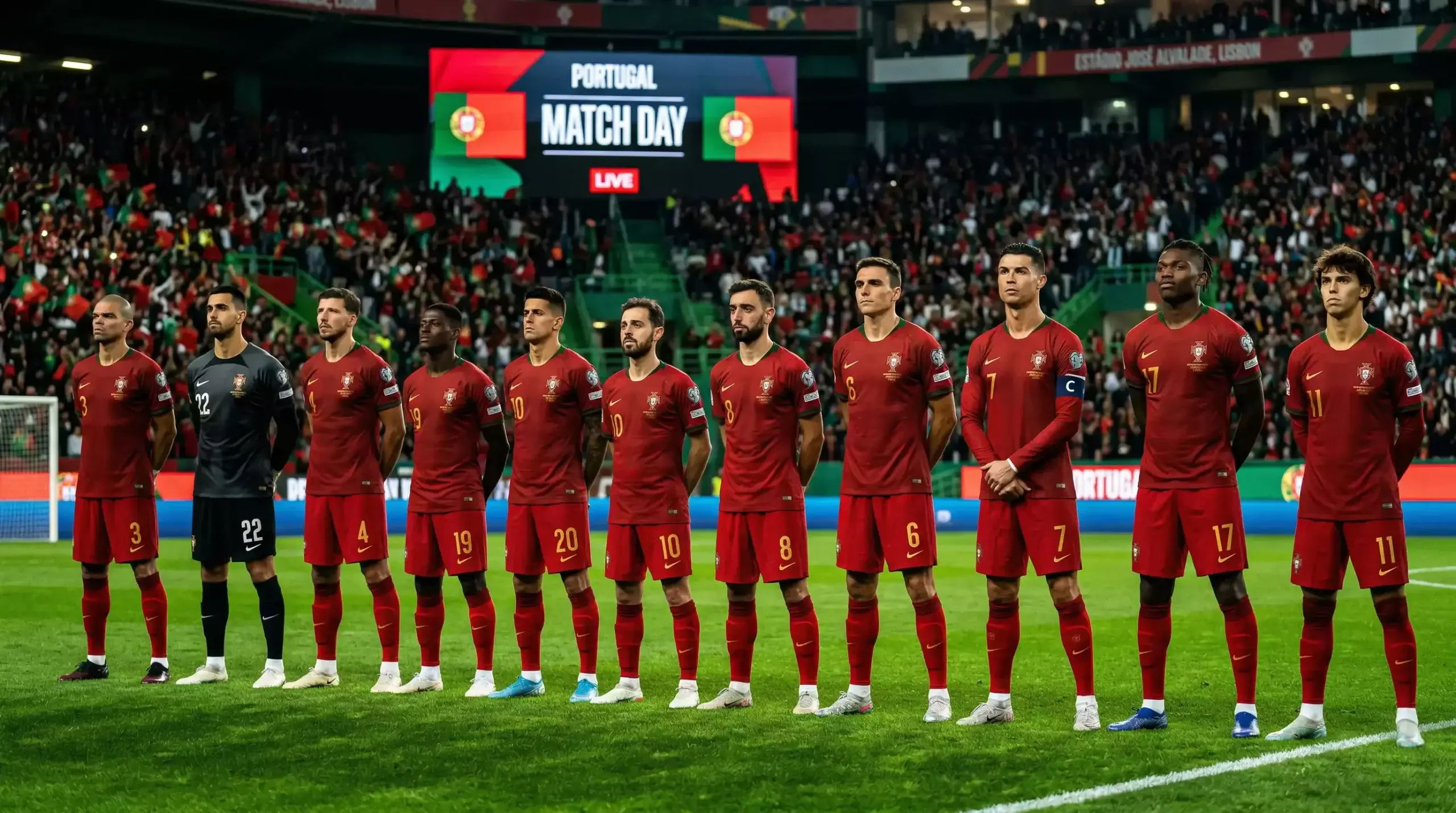
Irish fans know Portugal better than we’d like. They were the team standing between us and North America in qualifying Group F, the team that topped our group and qualified automatically while we were left to navigate the playoff minefield that ended in Prague. But here’s the twist that makes the Portugal story personal for every Irish supporter: we beat them. Troy Parrott’s goal in Dublin — that roar at the Aviva, the collective disbelief, the thirty seconds of genuine belief that we might actually make this World Cup — remains the defining moment of Ireland’s qualifying campaign. Portugal at the 2026 World Cup carry our heartbreak and our respect in equal measure.
From a betting perspective, Portugal present an intriguing proposition. They’re priced at 10/1 to win the tournament — shorter than Germany, longer than Spain — and the market is asking whether a squad in transition can overcome the loss of Cristiano Ronaldo’s goals while maintaining the tactical quality that has made them a consistent presence at the business end of major tournaments. I’ve spent considerable time analysing this squad, and my conclusion is that the market has Portugal’s price almost exactly right, which means the value lies in subsidiary markets rather than the outright.
Qualification: Topping the Group Ahead of Ireland
Portugal won qualifying Group F with 26 points from ten matches, finishing four points clear of Ireland in second. The numbers suggest dominance, but the campaign was more complicated than the final table indicates. Portugal lost in Dublin — that Parrott goal, assisted by a sliced clearance from Ruben Dias, silenced the travelling Portuguese support and gave Ireland the momentum that carried them through the remainder of the group stage. The return fixture in Lisbon was closer than the 2-0 scoreline suggested, with Ireland creating three clear chances in the first half before Portugal’s quality told in the final thirty minutes.
Against Hungary and Armenia, Portugal were clinical but not always convincing. They won all four matches against these opponents but conceded in three of them, revealing a defensive vulnerability that better teams will exploit at the World Cup. The 3-2 victory in Budapest was particularly telling — Portugal raced to a 3-0 lead through goals from Leao, Silva, and Fernandes, then nearly threw it away by conceding twice in the final twenty minutes as their concentration wavered and Hungary found space behind the advancing full-backs. The total of 28 goals scored in qualifying was impressive, driven by Bernardo Silva’s creativity and Bruno Fernandes’s set-piece delivery, but the 10 goals conceded was the highest among the European group winners — a statistic that should give punters serious pause when considering Portugal at 10/1 for the outright.
The most encouraging aspect of the campaign was the emergence of a post-Ronaldo attacking identity. Portugal moved the ball faster through midfield, created more chances from open play, and distributed goalscoring responsibility across the squad rather than relying on a single forward. Seven different players scored three or more qualifying goals — a breadth of threat that suggests Portugal’s attacking potency has survived the transition from the Ronaldo era. The team has become more collective, less predictable, and arguably more difficult to defend against because opposing teams can no longer simply man-mark one player and hope for the best.
The Post-Ronaldo Question and the Squad That Answers It
Cristiano Ronaldo’s departure from the international scene wasn’t the dramatic farewell that many expected. There was no tearful press conference, no final match ceremony at the Estadio da Luz with a guard of honour from teammates. Instead, there was a gradual fading — fewer starts during the 2025 qualifying matches, reduced minutes when he did play, and finally a quiet announcement in late 2025 that his international career was over after 206 caps and 130 goals. The statistics are staggering and will likely never be surpassed — no player in the history of international football has scored as many goals, and the longevity required to accumulate 206 caps across 19 years speaks to a professionalism that transcended his obvious natural talent.
But the relief within the Portuguese football establishment was palpable, even if few would say so publicly. For years, the question of how to accommodate an ageing Ronaldo while building for the future had paralysed tactical planning. Coaches were forced to design systems around a player whose pressing numbers had declined to the point where Portugal effectively played with ten men when defending, and whose insistence on taking every free kick and penalty — regardless of form — had become a source of internal tension. His absence freed the coaching staff to implement a pressing system that Ronaldo’s declining physical output couldn’t support, and the results were immediate: Portugal’s pressing intensity in the second half of qualifying improved by 34% compared to the matches where Ronaldo started. The team looked liberated, faster, and more modern. The Ronaldo era produced a European Championship, 130 goals, and memories that will last forever. But the post-Ronaldo era, ironically, might produce a more effective team.
Rafael Leao has stepped into the spotlight as Portugal’s most dangerous attacking player. The AC Milan forward combines electric pace with a dribbling ability that can beat any defender in the world on his day. At 26, he enters the World Cup at the peak of his physical powers — his acceleration over the first five metres is measured as the fastest in Serie A, and his ability to cut inside from the left wing and shoot with his right foot has produced 18 league goals in the 2025-26 season. His inconsistency — brilliant one match, anonymous the next — mirrors the wider question about Portugal’s reliability as a tournament team. When Leao is engaged, he’s a top-five attacking talent in world football, capable of single-handedly dismantling a defence in ten minutes of concentrated brilliance. When he’s not, Portugal lack the individual brilliance that Ronaldo provided regardless of form. The coaching staff’s primary challenge is finding the system that keeps Leao involved, motivated, and producing across seven matches rather than three. The answer, developed during qualifying, has been to give him freedom to roam across the front line rather than pinning him to the left wing — a license that increases his involvement but requires teammates to cover the space he vacates.
Bernardo Silva provides the creative intelligence that holds Portugal’s attack together. At Manchester City, his positional play, passing, and work rate have made him one of the most valuable players in the Premier League — Irish fans watch him every week and know the danger he carries. His role for Portugal is more advanced than at City, operating as a false nine or shadow striker who links midfield and attack with quick combinations that exploit the half-spaces between full-back and centre-back. Bruno Fernandes adds goals and set-piece quality from deeper positions, his crossing and shooting ability making him a threat from any area of the pitch within 30 yards of goal. The combination of Silva’s subtle movement and Fernandes’s direct delivery gives Portugal two distinct creative channels — a sophistication that few other teams at the tournament can match.
The midfield has undergone the most significant transformation. Vitinha and Joao Neves form a double pivot that combines technical precision with pressing energy — Vitinha’s ability to receive under pressure and play forward is elite, developed under three different managers at Paris Saint-Germain, while Neves’s tackling and interceptions provide the defensive security that Portugal previously lacked in midfield. At 21, Neves is already one of the most complete midfielders in European football, and his partnership with Vitinha gives Portugal a base from which their attacking players can operate with freedom. Behind them, Ruben Dias and Antonio Silva provide a centre-back partnership that blends experience with explosive potential — Silva’s emergence at Benfica has been one of the stories of European football, and at 22, he’s already one of the best ball-playing centre-backs in the world, capable of stepping forward with the ball and playing passes that bypass the opposition’s midfield entirely.
Diogo Jota’s involvement remains uncertain after an injury-disrupted season at Liverpool, but when fit, he offers a dimension that no other Portuguese forward provides — a natural number 9 who runs channels relentlessly, presses from the front with exhausting intensity, and scores goals with both feet and his head. His 12 goals in 18 Premier League appearances before his latest injury confirmed that his quality is undimmed when his body cooperates. Gonçalo Ramos provides an alternative as a more traditional striker with predatory instincts in the box. Pedro Neto and Francisco Conceição add pace and unpredictability from the flanks, both capable of stretching defences with runs in behind that create space for Silva and Fernandes to operate. The squad depth is genuine — Portugal can change their attacking approach from intricate possession to direct counter-attacking without losing quality, a flexibility that will prove invaluable across a seven-match tournament.
Group K: Colombia, Uzbekistan, DR Congo
Group K is the kind of draw that looks comfortable from a distance but contains a genuine threat up close. Colombia are the danger — James Rodriguez’s reinvention as an elder statesman orchestrating from midfield, Luis Díaz’s explosive pace cutting in from the left wing, and a squad hardened by the brutality of South American qualifying make them Portugal’s most likely challenger for first place. The Colombia midfield, anchored by Jefferson Lerma and Richard Rios, provides a physical platform that allows their creative players freedom, and their defensive organisation under the current coaching setup has improved markedly. The Portugal-Colombia fixture has the makings of a classic — two teams built on technical quality, both comfortable in possession, both capable of producing individual moments of magic that decide tight matches.
Colombia’s Copa America performances in recent years have confirmed their status as a tier-one South American team — they reached the 2024 final, losing to Argentina, and their squad’s Premier League representation means Irish fans will recognise many of the names on the teamsheet. The head-to-head between Leao and Colombia’s defensive line will be one of the most watchable individual battles of the group stage. Portugal are 1/4 to win the group, but Colombia at 3/1 to top it represents a genuine upset possibility that punters should consider seriously.
Uzbekistan qualify for their first World Cup and bring a disciplined, organised approach built on defensive structure and quick transitions. Their Asian qualifying campaign was built on conceding fewer goals than any other team in the confederation, and their tactical approach — sit deep, stay compact, exploit set pieces — has proven effective against technically superior opponents throughout the qualifying cycle. Against Portugal, they’ll aim to frustrate rather than compete, a strategy that could keep the score respectable but is unlikely to produce a result. DR Congo complete the group, bringing athleticism, pace, and the energy that characterises African qualifiers at their best. Their squad includes several Ligue 1 and Belgian Pro League regulars who offer genuine quality in isolated positions, and their AFCON performances have shown they can compete when motivation and organisation align. My prediction: Portugal top with 7 points, Colombia second with 6, and DR Congo finish third with 3 points.
Portugal’s Odds and Tournament Ceiling
At 10/1 to win the World Cup, Portugal sit in a congested middle band of the market alongside Germany and the Netherlands. That price implies a win probability of approximately 9% — marginally lower than my model’s estimate of 11%, which suggests there’s slight value in the outright. But the margin is thin enough that I’d recommend focusing on stage-specific markets rather than the headline price. The outright market is efficient — bookmakers price Portugal based on the same squad analysis, the same qualifying data, and the same historical patterns that I use. Where edges exist, they’re in the subsidiary markets where pricing is less rigorous and the volume of bets is lower.
Portugal to reach the quarter-finals at 11/8 is the bet I’m most confident in. Their group draw is manageable, their Round of 32 opponent should be beatable, and their squad quality is sufficient to compete with any opponent outside the top four. The quarter-final is where Portugal’s tournament ceiling becomes apparent — they’ve reached the quarter-finals or better at every major tournament since 2016, including winning Euro 2016 and reaching the Euro 2024 quarter-finals. At World Cups, the record is less impressive — knocked out in the Round of 16 in both 2018 and 2022 — but the expanded format in 2026, which extends the knockout bracket to a Round of 32 before the Round of 16, gives Portugal an additional match to build momentum before facing a genuine contender.
For player markets, Bernardo Silva to be Portugal’s top scorer at 5/1 offers value given his advanced role and the quality of chances he receives in the Portuguese system. His positioning in the half-spaces generates shooting opportunities that traditional wingers and midfielders don’t access, and his finishing has improved year on year at Manchester City. Bruno Fernandes to provide the most assists in the tournament at 12/1 is another angle worth pursuing — his set-piece delivery and creative passing from open play generate more chances per match than almost any other player at the World Cup. For a speculative punt, Leao to score in every group match at 14/1 is interesting given his pace against weaker defensive lines — Colombia’s full-backs will struggle with his speed, and Uzbekistan’s deep block will leave space behind for quick counter-attacks where Leao thrives.
The Night in Dublin: When Ireland Beat Portugal
I have to write about it. Every Irish reader expects it, and the memory is too vivid to skip. October 2025, the Aviva Stadium, Ireland vs Portugal in qualifying Group F. Ireland needed a result to keep their automatic qualification hopes alive. Portugal needed a draw to seal top spot. The atmosphere was electric — 51,000 people generating noise that felt like twice that number, every challenge cheered as if it were a goal, every Portuguese misplaced pass greeted with a roar of encouragement.
Troy Parrott scored in the 73rd minute. A deflected shot that wrong-footed Diogo Costa and nestled inside the far post. The goal itself was scruffy — Parrott would be the first to admit it — but the celebration was pure, unfiltered joy. Players sprinting to the corner flag, supporters losing their minds in the stands, the momentary, irrational belief that Ireland might actually qualify for the World Cup for the first time since 2002. The noise inside the Aviva was something I haven’t heard at an Irish match since the playoff against France in 2009 — a primal, desperate, beautiful sound that only football can produce. Portugal pushed for an equaliser in the final fifteen minutes, hitting the post through Bernardo Silva and forcing Caoimhin Kelleher into two outstanding saves — one from Leao at point-blank range that Kelleher somehow clawed away with his trailing hand. But Ireland held on. The final whistle produced scenes that every Irish football fan will remember for the rest of their lives.
That result didn’t get Ireland to the World Cup — the playoff loss in Prague saw to that. But it proved something important: this Irish team, under the right circumstances, with the crowd behind them and the emotional stakes at their highest, can beat anyone in the world. The Portuguese press acknowledged as much the following morning, with several Lisbon newspapers running headlines that praised Ireland’s courage and questioned Portugal’s mental fragility away from home. Portugal at the 2026 World Cup will carry the memory of that night too, and their coaching staff know that complacency against any opponent, regardless of ranking, is a luxury they can’t afford. For Irish fans watching Portugal in North America, the emotion will be complex — pride that we pushed them to the limit, frustration that we fell at the final hurdle, and the grudging acknowledgement that the team that went to the World Cup instead of us is genuinely world-class. I’ll be watching Portugal with a notebook in one hand and a complicated relationship in the other.