
Loading...
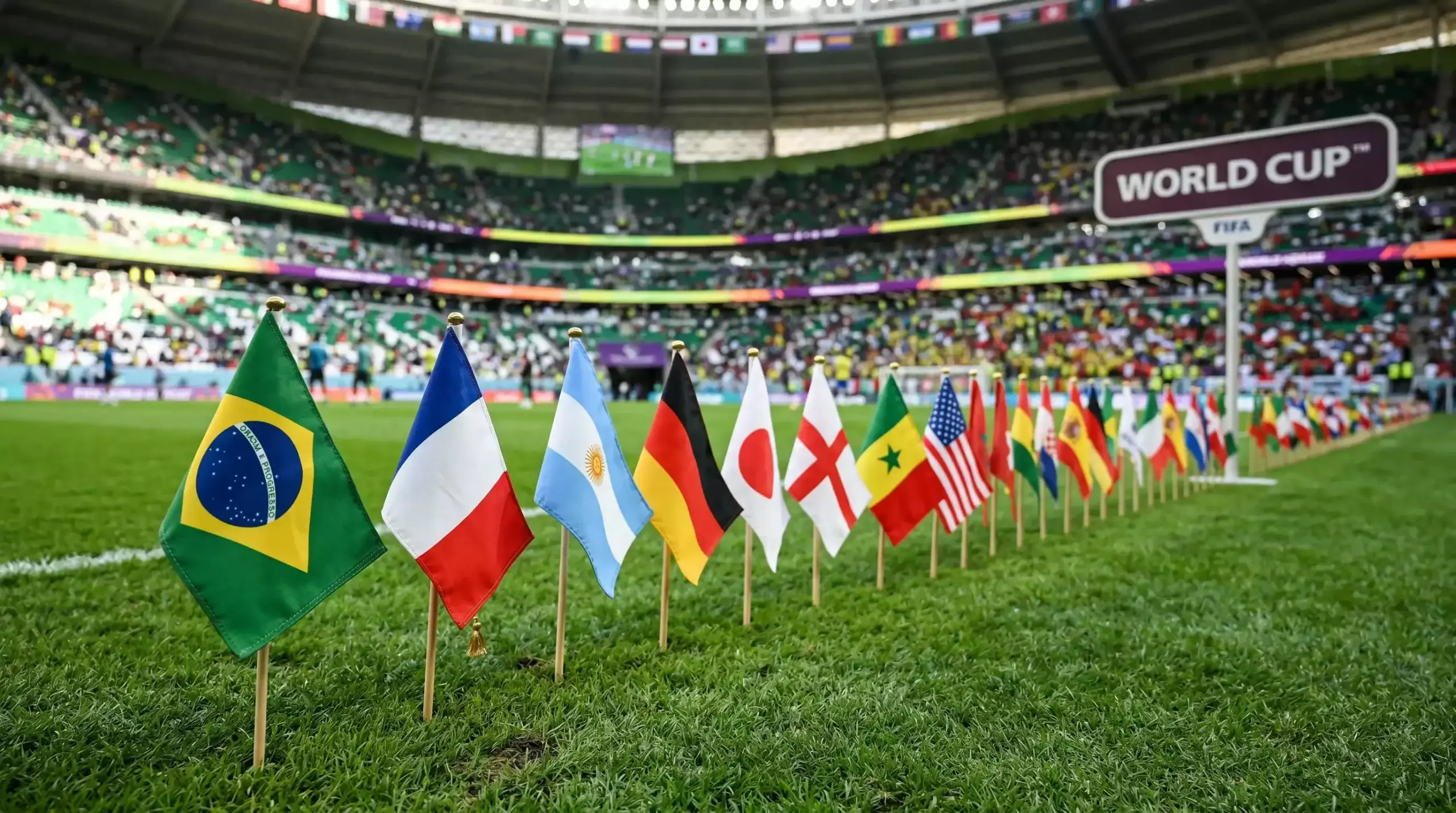
How do you tell the story of 48 nations? Not as a list. Not as a ranked index from best to worst. You tell it the way you would in a pub — one story at a time, each one connected to the next by a thread of rivalry, geography, or a shared player who used to play for Wolves.
The 2026 World Cup is the first to feature 48 teams, and the expansion has not diluted the quality so much as widened the range of stories. Alongside the usual suspects — Argentina defending their crown, France chasing another, Brazil seeking redemption — there are nations for whom simply being here is the achievement of a lifetime. Haiti are at a World Cup for the first time since 1974. Curaçao, an island of 150,000 people, will line up against Germany. Bosnia and Herzegovina return after their sole appearance in 2014. These are not footnotes. They are the reason the World Cup matters more than any other sporting event on earth.
For Irish fans watching from the outside after Czechia’s penalty shootout ended our own dream in Prague, this tournament is about finding your team. Maybe it is Scotland, drawn into the group of death with Brazil and Morocco. Maybe it is the underdog whose qualification story mirrors the heartbreak we know too well. Maybe it is just the Premier League lads you watch every Saturday, scattered across a dozen different nations. Whatever your angle, the 48 world cup 2026 teams that have gathered for this tournament carry enough narrative fuel to last you the entire summer. These are their stories.
The Contenders: Teams With Genuine Trophy Ambitions
Six teams have a realistic chance of lifting the trophy on 19 July at MetLife Stadium. That number is higher than usual, and the reason is structural: the 48-team format introduces more variables, more potential upsets in the early rounds, and more fatigue in the later stages. The traditional two-horse race between South America and Europe has become a six-horse scramble.
Argentina arrive as defending champions, but the team that won in Qatar is not the team that will take the pitch in June. Lionel Messi’s influence, whether he is in the squad as a symbolic presence or absent entirely, defines the narrative. The substance, however, lies in what Lionel Scaloni built around him. Enzo Fernandez has matured into one of the world’s most complete midfielders at Chelsea. Alexis Mac Allister controls tempo at Liverpool with the authority of a veteran. Julián Álvarez has developed into a genuine number nine at Atletico Madrid, and Lautaro Martínez provides the alternative. The defence, anchored by Cristian Romero and Lisandro Martínez, is aggressive and organised. Argentina’s weakness is depth in wide positions — without the creative overload that Messi provided, the team relies more heavily on structured build-up, which suits knock-out football but can struggle against deep-block opponents in the group stage. Their draw in Group J (Austria, Algeria, Jordan) is forgiving, and anything less than a quarter-final appearance would be considered a failure.
France are the team I would least like to bet against. They have a remarkable ability to underperform in qualifying and friendlies, generate crisis headlines, and then click into gear the moment a tournament begins. Kylian Mbappé is now at Real Madrid and playing the best football of his career. Behind him, the depth is extraordinary: Ousmane Dembélé, Antoine Griezmann, Randal Kolo Muani in attack; Aurélien Tchouaméni, Eduardo Camavinga, Youssouf Fofana in midfield; Theo Hernández, Dayot Upamecano, William Saliba in defence. France do not merely have a strong starting eleven — they have two strong starting elevens. That depth becomes decisive in a 39-day tournament where squad rotation is not a luxury but a necessity.
Brazil’s story is one of expectation and anxiety. Twenty-four years without a World Cup title weighs heavily on a nation that considers anything less than victory a national embarrassment. The new generation of Vinícius Júnior, Rodrygo, and Endrick brings raw attacking brilliance, but the midfield remains a question mark. Bruno Guimarães at Newcastle provides physicality, and Lucas Paquetá offers creativity, but the central axis lacks the commanding presence of a Casemiro or Fernandinho in their prime. Brazil’s group — alongside Morocco, Scotland, and Haiti — is trickier than a two-time semi-finalist deserves, and the early rounds will test whether Dorival Júnior’s tactical pragmatism can coexist with Brazilian flair.
England enter a World Cup as genuine contenders for the third consecutive cycle, and the talent at their disposal is staggering. Jude Bellingham has become one of the three best players in world football. Phil Foden, Bukayo Saka, and Cole Palmer provide attacking options that previous England managers could only dream of. Declan Rice and Kobbie Mainoo offer a midfield balance of destruction and distribution. The defence, with Trent Alexander-Arnold redefining the right-back position, is both adventurous and vulnerable — a combination that produces thrilling football and occasional heart attacks. England’s tournament ceiling is the final. Their tournament floor, given the Group L draw of Croatia, Panama, and Ghana, is a comfortable quarter-final exit that leaves the nation wondering what went wrong. The margin between those outcomes is razor-thin and entirely dependent on the manager’s willingness to trust the attacking talent rather than retreat into caution when it matters most.
Spain won Euro 2024 by playing the most exhilarating football of any national team in years. Lamine Yamal, who will still be 18 during the World Cup, is a generational talent whose dribbling and vision recall a young Messi. Pedri and Gavi control the midfield with a passing intelligence that makes opponents feel like they are chasing shadows. Nico Williams provides electric width on the left flank. The concern is that Spain’s brilliant Euro campaign was conducted on European soil with short travel distances and familiar conditions. North America — with its continental distances, varying altitudes, and summer heat — presents a different physical challenge. Spain’s squad is young, which is an advantage in terms of recovery but a potential liability in terms of tournament experience. Group H (Uruguay, Saudi Arabia, Cabo Verde) is manageable but includes a clash with Uruguay that could be the most tactically absorbing group-stage match of the entire tournament.
Germany complete the list of genuine contenders, and their inclusion is the most debated. Two consecutive group-stage exits suggest a team in decline. The home Euros suggested a team reborn. The truth is somewhere in between: Germany have world-class attacking talent in Florian Wirtz and Jamal Musiala, a reliable defensive structure under Julian Nagelsmann, and a relatively kind draw in Group E. What they lack is the aura of invincibility that previous German World Cup squads carried. At 12/1, the market is asking whether Germany can turn talent into tournament momentum. I believe they can.
Dark Horses: Don’t Sleep on These Sides
Morocco’s 2022 run to the semi-finals was not a fairytale — it was a strategic masterclass that the rest of Africa has been trying to replicate ever since. Walid Regragui built a team around defensive discipline, rapid transitions, and a collective intensity that overwhelmed Belgium, Spain, and Portugal in succession. The core of that squad remains intact. Achraf Hakimi at right-back is among the best full-backs in world football. Sofiane Amrabat provides midfield steel. Youssef En-Nesyri scores goals in La Liga. Group C pairs Morocco with Brazil, Scotland, and Haiti — a group where second place is entirely achievable and where a first-place finish is not out of the question. Morocco are no longer a surprise. They are a proven tournament team priced like one that got lucky.
Colombia arrive in North America on the back of a qualifying campaign that included a 28-match unbeaten streak. That run was not built on easy fixtures — it included victories over Argentina in Buenos Aires and Brazil in Barranquilla. Luis Díaz, now one of the Premier League’s most dangerous attackers at Liverpool, leads the forward line with a directness that terrifies full-backs. Jhon Durán provides a physical alternative through the centre. The midfield still features James Rodríguez, 34 and operating at a reduced physical level but possessing a passing range that remains unmatched in South American football. Colombia’s Group K draw alongside Portugal, Uzbekistan, and DR Congo is competitive but navigable. If they finish second behind Portugal, a round-of-32 match against a weaker group winner from the other half of the bracket could set up a quarter-final run.
Japan have made a habit of embarrassing favourites at World Cups and then failing to capitalise. They beat Germany and Spain in the 2022 group stage, then lost to Croatia on penalties in the round of 16. The squad for 2026 is the strongest Japan have ever assembled: Takefusa Kubo, Kaoru Mitoma, Takehiro Tomiyasu, Wataru Endo, Daichi Kamada — names that appear in the Premier League, La Liga, and the Bundesliga every week. Japan’s pressing system is metronomic in its precision, and their ability to absorb pressure and strike on the counter is ideal for knockout football. Group F (Netherlands, Tunisia, Sweden) is the right level of difficulty: hard enough to test them, soft enough to qualify from. At 40/1, Japan are the dark horse I would put real money on.
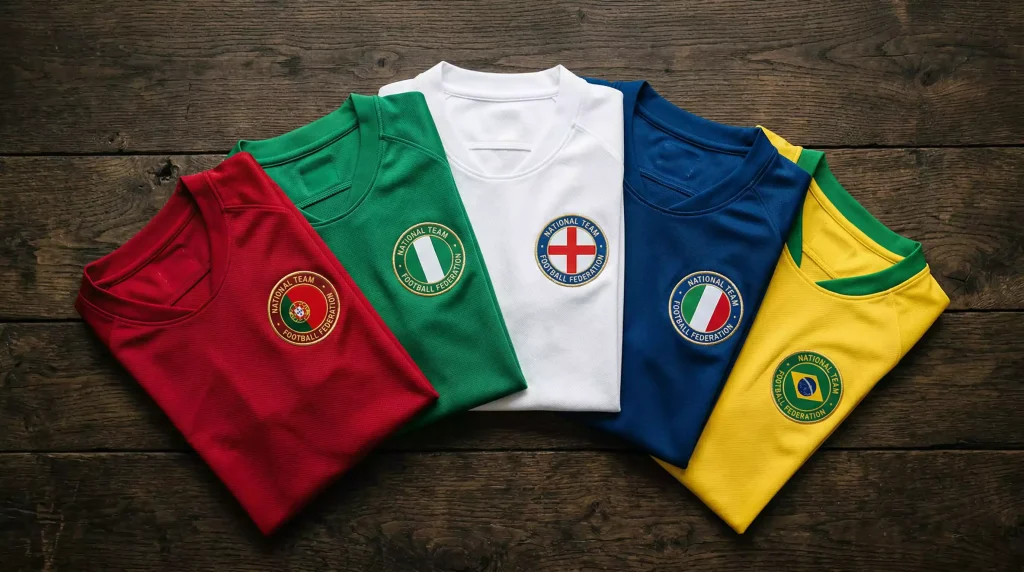
Turkey are the youngest contender in this bracket. Arda Güler at Real Madrid, Kenan Yıldız at Juventus, and Ferdi Kadıoğlu at Brighton form an attacking core whose average age is 22. This is a golden generation in the truest sense — players developed at elite European clubs who carry none of the baggage of Turkey’s previous tournament disappointments. Group D (USA, Australia, Paraguay) is beatable, and a round-of-32 meeting with a weakened group winner could produce the upset of the tournament. Turkey’s risk is inconsistency: they can be brilliant for 60 minutes and then switch off for 15, which at a World Cup is fatal. But the talent ceiling is as high as any team outside the top six.
Uruguay round out the dark horse conversation. Two-time World Cup winners, a ruthless competitive streak, and Federico Valverde operating as arguably the most complete midfielder in world football. Darwin Núñez provides chaotic attacking energy, Ronald Araújo anchors the defence, and the overall squad mentality — forged in decades of punching above their weight in South American qualifiers — is tailor-made for tournament football. Uruguay have reached at least the quarter-finals at three of the last four World Cups. At 33/1, the market is pricing them as outsiders. History and squad quality say otherwise.
The Celtic Connection: Scotland’s Big Stage Moment
When the draw paired Scotland with Brazil, the reaction in Irish pubs was louder than in most Scottish ones. That is not an exaggeration. The Celtic bond between Ireland and Scotland runs deeper than football — it is cultural, historical, and emotional in a way that defies easy explanation. We share a love of the underdog, a distrust of easy optimism, and a firm belief that if anyone is going to beat Brazil while the whole world watches, it should be someone who looks like us.
Scotland qualified for this World Cup through a qualifying campaign built on Steve Clarke’s principles: defensive solidity, midfield control, and an absolute refusal to be bullied by bigger nations. They finished second in their qualifying group, behind only Germany, and won the playoff against Wales in Cardiff with a performance that was equal parts courage and tactical intelligence. This is a Scotland team that does not apologise for how it plays. The direct football, the set-piece threat, the willingness to defend deep and hit on the break — it is not pretty, but it is effective, and it has earned them a place at a World Cup for the first time since 1998.
The squad carries familiar faces for Irish fans. John McGinn, now a veteran of the Premier League with Aston Villa, provides the midfield energy and late runs into the box that Scotland’s system depends on. Andrew Robertson, Liverpool’s left-back, brings world-class quality and leadership. Scott McTominay, who has flourished at Napoli after leaving Manchester United, is the box-to-box presence who connects defence to attack. Billy Gilmour, quietly excellent at Brighton, offers the technical quality that balances Scotland’s more physical approach. In attack, Che Adams and Lyndon Dykes provide different options — Adams’ pace against high lines, Dykes’ physicality against deep blocks.
Group C is a story in itself. Brazil are the top seed and the clear favourites, but Morocco — semi-finalists in 2022 — are the team Scotland must beat to have any chance of advancing. The head-to-head between Scotland and Morocco is the pivotal fixture in the group, likely deciding who finishes second and who finishes third. Scotland’s defensive record in qualifying (11 goals conceded in 10 matches) suggests they can keep Morocco at bay, and a single goal from a set piece could be enough to secure a result. Haiti, the group’s debutants, are the match where Scotland must pick up three points without expending excessive energy.
The Tartan Army will travel in numbers. Scottish fans are among the most recognisable and best-loved supporters at any major tournament, and the prospect of Scotland versus Brazil in a World Cup group match — a fixture that has not happened since the 1998 opening ceremony in Paris — will draw thousands to North America. For Irish fans who cannot justify the transatlantic trip, the next best thing is a pub in Dublin or Cork with a Scotland jersey borrowed from a mate, a pint in hand, and the irrational but irresistible belief that this time, against all odds, something magical might happen.
Scotland’s realistic ceiling at this World Cup is the round of 32. Their dream ceiling is the round of 16. Either outcome would be historic, and either outcome would make every Irish neutral who adopted them feel like they had a stake in the greatest show on earth.
Premier League Faces Across the Tournament
There is a particular kind of dissonance that comes from watching a player you see every weekend in the Premier League line up in a different shirt, singing a different anthem, in front of a different flag. It is the thread that connects Irish fans to this World Cup more than any other. We do not have our own team in the tournament, but we have our players — the ones we watch every Saturday, argue about every Monday, and feel an irrational kinship with because we know their habits, their weaknesses, and their celebration routines better than their own compatriots do.
England’s squad is, predictably, the most Premier League-heavy contingent at the tournament. Jude Bellingham (Real Madrid aside) is surrounded by players who define England’s top flight: Bukayo Saka and Declan Rice at Arsenal, Phil Foden and Kyle Walker at Manchester City, Cole Palmer at Chelsea, Harry Kane — still the division’s all-time top scorer even though he now plays in Munich. For Irish fans who follow any Premier League club, England’s matches are essentially a midweek fixture with higher stakes. You know exactly what Saka will do when he cuts inside on his left foot. You know Rice will intercept the pass before the commentator has finished the sentence. The familiarity is total.
But the Premier League presence stretches far beyond England. Mohamed Salah will lead Egypt in Group G, carrying 12 seasons of English football knowledge and a left foot that has produced more Premier League goals than all but a handful of players in history. Salah at a World Cup, representing his country in front of an American audience, is a storyline that transcends club allegiances. Bruno Fernandes anchors Portugal’s midfield with the same flair and frustration that Manchester United fans experience every week. Virgil van Dijk and Cody Gakpo lead the Netherlands with the calm authority that Liverpool supporters recognise instantly.
South Korea’s Son Heung-min, Tottenham’s talisman, will likely play his final World Cup at 33. His ability to drift across the front line, find half-spaces, and finish with either foot is as familiar to Premier League viewers as their morning commute. Japan’s Kaoru Mitoma brings Brighton’s left-flank wizardry to Group F, while Wataru Endo provides the same disciplined midfield screen for Japan that he does for Liverpool. Ecuador’s Moises Caicedo, Chelsea’s midfield enforcer, will be one of the youngest captains at the tournament.
The Premier League connection also creates betting angles that Irish punters can exploit. If you watch Mitoma skin full-backs every week at Brighton, you have a more nuanced assessment of Japan’s attacking threat than a pure data model can provide. If you have seen Alexander Isak’s finishing at Newcastle — clinical inside the box, wasteful outside it — you have information about Sweden’s goal threat that the odds compiler has to approximate from aggregate data. This granular, match-day knowledge of individual players is a competitive advantage in player prop markets: anytime scorer, shots on target, assists, and cards. The bookmaker prices these markets using season-long statistics. You price them using what you saw last Saturday.
Across all 48 teams, roughly 140 players at this World Cup play their club football in England’s top two divisions. That is nearly three players per squad, on average, who spend their weekends performing in front of Irish television audiences. The World Cup is often described as a festival of global football. For Irish fans, it is also a festival of familiar faces in unfamiliar colours.
Debutants and Returning Nations
The 48-team format exists, in part, to give more nations a seat at the table. It has delivered. This World Cup features genuine first-timers and long-absent returnees whose presence adds a dimension of joy and improbability that no amount of tactical analysis can capture. These are the teams that remind you why the World Cup is the World Cup and not just a Champions League with flags.
Haiti’s story is the most extraordinary. The Caribbean nation of 11 million people last appeared at a World Cup in 1974, when they lost all three group matches in West Germany. Fifty-two years later, they are back — and they are in Group C with Brazil, Morocco, and Scotland. Haiti qualified through the CONCACAF route, beating Jamaica and Honduras in decisive qualifiers that were played in front of crowds so loud the pitch vibrated. The squad is a diaspora team: players born in Port-au-Prince but developed in France, the USA, and Canada. Their journey mirrors the Haitian experience itself — scattered by circumstance, reunited by purpose. Every neutral at this World Cup will have a soft spot for Haiti, and their match against Scotland is the fixture that could define both teams’ tournaments.
Curaçao are the smallest nation by population to appear at a World Cup since Trinidad and Tobago in 2006. With 150,000 inhabitants — fewer than the population of County Galway — they have produced a squad built almost entirely on Dutch-Curaçaoan dual nationals. Players like Juninho Bacuna and Cuco Martina have Premier League experience, and the squad’s tactical organisation under their Dutch-born manager reflects a level of professional infrastructure that belies the island’s size. Group E (Germany, Ecuador, Côte d’Ivoire) offers no easy matches, but Curaçao’s objective is not to advance — it is to compete, to score a goal at a World Cup, and to show that population is not destiny.
Cabo Verde, an archipelago of 500,000 people off the west coast of Africa, make their World Cup debut in Group H alongside Spain, Uruguay, and Saudi Arabia. Their qualification through the African route required beating Nigeria in a playoff — a result that sent shockwaves across the continent. Like Curaçao, their squad draws heavily on dual nationals, with several players based in Portugal and France. Cabo Verde’s presence is a testament to the expanded format’s ability to include nations whose footballing traditions deserve global exposure.
Bosnia and Herzegovina return after their sole World Cup appearance in 2014, where they lost to Argentina but beat Iran and drew with Nigeria. Edin Dzeko, now 40, will not be in the squad, but the legacy of his generation has inspired a new wave of Bosnian talent. Group B (Canada, Switzerland, Qatar) is competitive but not overwhelming, and Bosnia’s physical, direct style of football could produce at least one memorable result.
Iraq return to the World Cup for the first time since 1986, carrying the emotional weight of a nation that has endured decades of conflict and displacement. Drawn in Group I with France, Senegal, and Norway, Iraq face a brutal schedule, but the team’s Asian Cup performances in recent years — including a run to the semi-finals in 2024 — suggest they are more than capable of competing at this level. Jordan, also in the expanded field, represent the new wave of West Asian football and bring a defensive resilience that could frustrate Argentina in Group J.
These debutants and returnees will not win the World Cup. But they will provide moments — a goal against a giant, a defensive stand that earns a draw, a celebration that makes the global audience fall in love — that no amount of odds analysis can predict or price. The World Cup’s magic lives in the margins, and the 48-team format has widened those margins beautifully.
Home Advantage: USA, Mexico, and Canada
Three host nations at a single World Cup has never been attempted before. The logistics are mind-bending — matches spread across 16 stadiums in 16 cities, spanning four time zones and three countries with distinct footballing cultures. For the teams playing at home, the advantage is real but uneven. Not all home advantages are created equal.
The United States are the primary host, with 11 of the 16 stadiums on American soil, including MetLife Stadium in New Jersey for the final. The USMNT squad is the most talented in the programme’s history. Christian Pulisic remains the creative heartbeat, now thriving at AC Milan rather than struggling for consistency at Chelsea. Weston McKennie and Tyler Adams provide a midfield engine room with Serie A and Premier League pedigree. Gio Reyna, when fit, offers the kind of flair that American football historically lacked. The defence, anchored by Sergino Dest and Chris Richards, has improved dramatically under the current tactical setup. Group D (Australia, Paraguay, Turkey) is beatable, and the USA will play their group matches in front of 70,000-plus crowds that will make the atmosphere feel like an American sporting event — loud, relentless, and overwhelmingly partisan. The concern for bettors is that the USA’s price is inflated by patriotic money. At around 16/1, the odds reflect hope as much as quality. The squad is good enough to reach the quarter-finals, but the semi-finals would require beating a genuinely elite team on their way through the bracket, and the USA’s record against top-six nations in competitive football is poor.
Mexico open the tournament at the Estadio Azteca on 11 June against South Africa. It is a moment of profound symbolism — the Azteca becomes the first stadium to host matches at three different World Cups (1970, 1986, 2026). Mexico’s footballing culture is the most intense of the three host nations, and the atmosphere at the Azteca, at 2,200 metres above sea level, is among the most hostile in world football. The altitude is a genuine tactical factor that visiting teams underestimate at their peril. Mexico’s squad, however, is in a transitional phase. The generation that carried Mexican football through the 2010s has aged out, and the replacements are competent but lack the star quality of a Chicharito or a Rafael Marquez. Group A (South Korea, South Africa, Czechia) is navigable, and Mexico should advance, but the round-of-16 ceiling that has defined their World Cup history since 1994 — they have been eliminated in the round of 16 at seven consecutive tournaments — looms large. Breaking that curse would require a performance level that the current squad may not possess.
Canada are the least favoured of the three hosts and the most interesting for neutral observers. Their 2022 World Cup appearance, where they lost all three matches but competed gamely against Belgium and Croatia, was a coming-of-age moment for Canadian football. Alphonso Davies at Bayern Munich is a genuine world-class talent — his pace on the left flank is electrifying, and his ability to defend and attack with equal intensity makes him one of the most versatile players at the tournament. Jonathan David, prolific at Lille, provides the goals. Group B (Switzerland, Qatar, Bosnia and Herzegovina) is competitive, and Canada’s matches in Toronto and Vancouver will carry an emotional charge that transcends the on-pitch quality. Canada are unlikely to go deep, but a single knockout-round victory would be the greatest achievement in Canadian football history.
For Irish punters, the host-nation narrative offers a specific betting angle: home teams at World Cups historically outperform their pre-tournament odds in the group stage but underperform in the knockout rounds. The crowd, the familiarity with the pitches, and the absence of travel fatigue give hosts a measurable group-stage boost. In the knockouts, when the opposition is stronger and the pressure of expectation increases, that advantage evaporates. Back the hosts to qualify from their groups. Fade them in the later rounds.
The Beautiful Underdogs
Somewhere between the contenders and the debutants sits a band of teams who are too good to be dismissed and too limited to be feared. These are the beautiful underdogs — nations whose World Cup stories will be measured not in trophies but in moments, and whose fans will remember this summer for the rest of their lives regardless of the results.
Senegal, Africa Cup of Nations champions in 2022, arrive in Group I with France, Norway, and Iraq. Sadio Mane’s international retirement left a void that the squad has filled collectively rather than individually. Senegal play with the kind of defensive discipline and counterattacking sharpness that makes them a nightmare for any team expecting an easy three points. Their match against France will be one of the most watched group-stage fixtures worldwide, and a repeat of their 2002 shock — when Senegal beat France in the World Cup opener — is not as implausible as the odds suggest.
Ghana’s inclusion in Group L alongside England and Croatia places them in the most media-scrutinised group at the tournament. Ghanaian football has reinvented itself since the squad controversies that marred the 2022 campaign. A new generation of European-based players, including several from the Championship and Bundesliga, brings energy and tactical awareness. Ghana are unlikely to progress, but their match against England — loaded with post-colonial subtext and shared football heritage — will generate headlines regardless of the score.
South Africa return to the World Cup for the first time since hosting in 2010. That tournament, Bafana Bafana’s greatest footballing moment, ended in the group stage despite a spirited performance. Sixteen years on, South African football has endured a period of decline and is now in the early stages of recovery. The opening match against Mexico at the Azteca will be a daunting assignment, but South Africa’s physical style and pace on the counter could unsettle a nervous Mexican side on opening night. If there is a single result in the group stage that could define the entire tournament’s narrative tone, Mexico versus South Africa on 11 June is the candidate.
New Zealand, the lone Oceania representative, face Belgium, Iran, and Egypt in Group G. The All Whites’ squad is the most competitive they have produced, with several players at mid-table European clubs and a defensive structure that frustrated Australia across two qualifying legs. A point — any point — would be celebrated as a triumph. A goal would be a national holiday. And if, by some alignment of footballing stars, New Zealand beat one of their group opponents, the story would be told in Wellington for a hundred years.
These teams will not win the World Cup. Most will not survive the group stage. But their presence makes the tournament whole. Without underdogs, there are no upsets. Without upsets, there is no magic. And without magic, it is just football — and the World Cup has never been just football.
Forty-Eight Flags, One Summer
This is the biggest World Cup ever staged, and the breadth of stories it contains is unlike anything international football has produced before. From Argentina’s defence of their crown to Haiti’s first appearance in half a century. From Mbappé’s prime years to a teenager from Curaçao lining up against Germany. From the Azteca’s third World Cup opening to MetLife Stadium’s first final.
For Irish fans, the tournament is a paradox: the team is absent, but the connection is everywhere. In every Premier League face wearing a different nation’s shirt. In Scotland’s Celtic bond. In the late-night matches that will keep Dublin and Cork awake until two in the morning. In the quiet satisfaction of backing a team you discovered during the group stage and riding their run to the quarter-finals.
Forty-eight nations. Forty-eight reasons to stay up late. The stories are already written in the squads and the groups and the fixtures. All that remains is the football.