
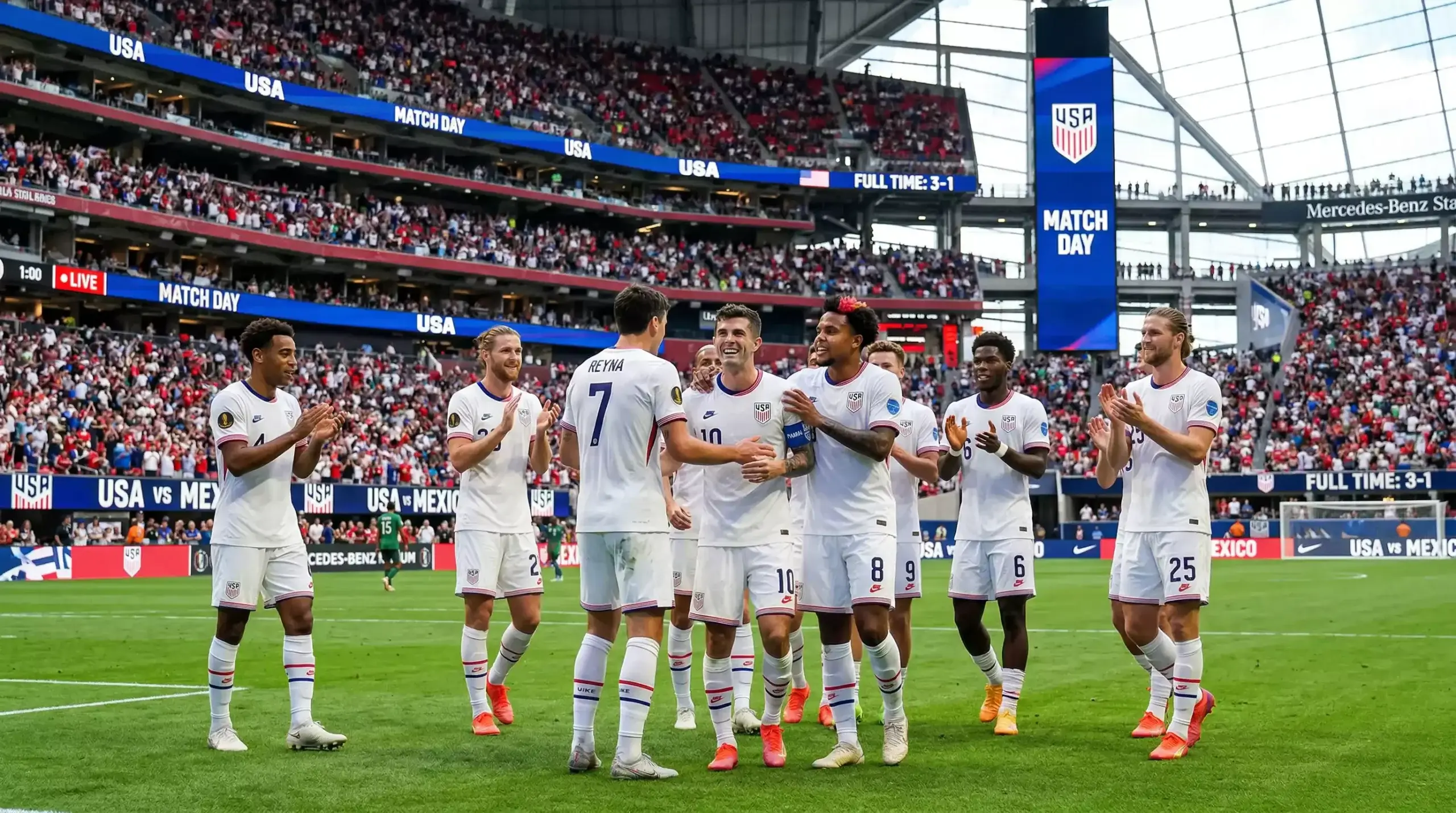
The last time the United States hosted a World Cup, in 1994, American soccer was a curiosity. The stadiums were full — Americans will attend anything with sufficient spectacle — but the sport itself was a niche concern, a game played by children in suburbs and immigrants in parks. Thirty-two years later, the landscape has transformed beyond recognition. The MLS is a legitimate professional league, European clubs are stocked with American internationals, and the USMNT has a generation of players competing at the highest level of club football. 1994 was a party. 2026 needs to be a statement — proof that the United States has arrived as a serious football nation, not just a commercial market.
For Irish punters, the USA present an interesting case study in how host-nation status distorts odds markets. The USMNT are priced at 16/1 to win the tournament — shorter than their squad quality would suggest if they were playing on neutral ground. That premium reflects the historical advantage that host nations enjoy at World Cups: home crowds, familiar conditions, no travel fatigue, and the psychological boost of an entire country behind them. Whether that advantage is real or overstated is the question that will determine whether 16/1 represents value or a trap.
The Squad: Premier League and European Stars
Christian Pulisic is the name every Irish Premier League fan recognises, and at 27, he arrives at the home World Cup as the most complete American footballer ever produced. His transformation at AC Milan — from an inconsistent talent at Chelsea to one of Serie A’s most productive wide players — has been remarkable. Pulisic scored 14 league goals in the 2025-26 season, playing primarily from the right wing with the license to cut inside and shoot with his weaker left foot. His ability to perform in high-pressure European matches translates directly to World Cup football, and his experience at the 2022 tournament — where he scored the winning goal against Iran but was injured in the process — gives him the emotional drive to make this World Cup his defining moment.
Weston McKennie provides the midfield engine that Pulisic needs alongside him. His energy, box-to-box running, and aerial presence at Juventus have made him one of the most important American players of his generation. McKennie covers more ground per match than almost any midfielder in Serie A, and his willingness to make lung-busting runs in the final twenty minutes of tight matches — when other midfielders are conserving energy — makes him invaluable in a tournament format where games are won and lost in the closing stages.
Tyler Adams anchors the midfield from a deeper position. His injury history is a concern — he’s missed significant stretches of the past two seasons — but when fit, his pressing intensity and tactical intelligence give the USMNT a defensive midfield presence that rivals any team outside the top five. Gio Reyna offers creative spark from an advanced position, his passing range and vision adding a dimension that the American system sometimes lacks when it relies too heavily on physicality and pace.
In defence, the squad has matured significantly since the embarrassing failure to qualify for the 2018 World Cup. Sergino Dest provides attacking intent from right-back, his overlap runs creating width that stretches opposing defences. Chris Richards and Tim Ream compete for centre-back starting positions, with Richards offering the more modern profile — comfortable on the ball, aggressive in his positioning, and capable of stepping forward into midfield to create numerical advantages. Matt Turner in goal has been solid if unspectacular for Arsenal’s domestic cup campaigns, and his shot-stopping gives the USA a reliable last line that won’t cost them matches through errors.
The squad’s European pedigree is its strongest asset. Fourteen of the likely 26-man squad play for clubs in Europe’s top five leagues — a depth of high-level experience that no previous American generation could match. These players understand the tactical demands of knockout football, the mental fortitude required to perform in hostile stadiums, and the physical intensity of matches where every challenge matters. The concern is that this experience doesn’t extend to the full squad — the domestic MLS-based players, while talented, have never been tested at the level a World Cup semi-final demands.
Group D: Australia, Paraguay, Turkey
The draw was kind to the hosts — but not as kind as some assume. Group D contains Turkey, a team with genuine European pedigree and a golden generation of young players who have been building toward this tournament for three years. Arda Güler, the Real Madrid playmaker, is the most talented teenager in world football outside of Yamal, and his ability to unlock defences with a single pass gives Turkey a match-winning threat that the USA will struggle to contain. Hakan Çalhanoğlu provides the midfield control and set-piece quality that gives Turkey a creative foundation, while Kenan Yıldız offers pace and directness from the flanks that mirror Pulisic’s own qualities. The USA-Turkey fixture, likely on matchday two, is the match that will define the group — and Turkey’s experience in European competition gives them an edge in high-pressure moments that the Americans’ club pedigree may not fully compensate for.
Australia bring familiarity and fight. The Socceroos have become a permanent fixture at World Cups, qualifying for their sixth consecutive tournament, and their squad contains enough Premier League and Championship experience to be competitive against any group-stage opponent. Their World Cup record is respectable — they reached the Round of 16 in 2022, beating Denmark and drawing with France in the process — and they’ll approach the USA match with the confidence of a team that knows how to perform on the biggest stage. The Australian mentality in tournament football is remarkably consistent: they rarely produce magical performances, but they never produce catastrophic ones. That reliability makes them dangerous opponents for hosts who might expect an easy opening match.
Paraguay are the group’s outsiders, qualifying through a competitive South American process that hardened their squad for the physical demands of tournament football. Their defensive discipline and set-piece threat make them dangerous against any team that expects to dominate possession, and the heat of a North American summer suits their style — South American teams are accustomed to playing in conditions that would exhaust European squads. Paraguay’s centre-back pairing is physical and aggressive, and their willingness to foul strategically to break up attacking momentum will frustrate the USA’s more fluid approach.
The USA are 4/7 to win the group, a price that reflects home advantage rather than pure squad quality. Without the home crowd, I’d price them closer to evens. The value play in this group is Turkey to qualify at 5/6 — they have the individual quality to finish second, and the expanded format means even a third-place finish could be enough. My prediction: USA top with 7 points, Turkey second with 5, Australia third with 4 points.
Home Advantage: Does It Actually Work at World Cups?
The data on host-nation advantage at World Cups is clear: it works, but it doesn’t guarantee anything beyond the group stage. Since 1930, host nations have won the tournament six times — including Brazil in 1950 (no, wait, they lost the final), France in 1998, and Germany in 2006 (semi-finals). The pattern is that hosts almost always qualify from the group stage and almost always reach at least the quarter-finals, but converting that advantage into the trophy requires squad quality that matches the occasion.
For the USA in 2026, the home advantage manifests in several concrete ways. First, no travel. While European and South American teams will cross time zones — flying from Dallas to Seattle, from Miami to Kansas City — within the tournament, the USMNT’s base camp will be strategically located to minimise transit time between venues. The coaching staff selected their training base over a year in advance, prioritising proximity to the Group D venues and the likely knockout-round stadiums on their side of the bracket. Second, crowd support. Eleven of the sixteen venues are in the United States, and the American soccer fanbase — swelled by the 2022 World Cup’s impact on the sport’s popularity and a decade of MLS expansion — will create an atmosphere that rivals anything in European football. The MetLife Stadium, AT&T Stadium, and SoFi Stadium are among the largest enclosed venues in the world, and at full capacity, the volume will be overwhelming for opponents unaccustomed to American sports crowd culture.
Third, climate familiarity. The North American summer heat, particularly in venues like Dallas (where temperatures regularly exceed 35 degrees Celsius in June), Houston, and Miami, will be a significant factor in afternoon kick-offs. American players train in these conditions year-round. European teams arriving from temperate June weather in their home countries will feel the difference immediately — reduced running capacity, faster dehydration, and the sluggishness that comes from bodies unaccustomed to performing at peak intensity in oppressive heat. The scheduling of several Group D matches in southern venues is not coincidental — FIFA’s allocation of host-nation matches to warmer cities gives the USA an environmental advantage that the odds don’t fully price in.
The counter-argument is that home advantage creates pressure that can be paralysing rather than empowering. South Africa in 2010 and Qatar in 2022 both failed to progress from the group stage as hosts, crumbling under the weight of national expectation. Japan and South Korea co-hosted in 2002 and produced contrasting results — South Korea reached the semi-finals amid controversy, while Japan went out in the Round of 16. The USA’s squad is young — average age 26 — and many of these players have never experienced the scrutiny that a home World Cup generates. Every training session will be front-page news on ESPN and Fox Sports. Every poor result will trigger a media firestorm on social platforms that American athletes are particularly exposed to. The players who thrive in that environment will become national heroes — names that cross over from the soccer community into mainstream American sports culture. The players who shrink will be remembered for the wrong reasons. The pressure of being hosts, combined with the expectation that this squad should deliver a deep run, creates a psychological burden that the 16/1 price doesn’t adequately account for.
USA Odds: Overpriced by Patriotism?
At 16/1, the USA are priced significantly shorter than their Elo rating would suggest. On a neutral venue, my model prices them at approximately 25/1 — meaning the market is attributing roughly 4/1 of value to home advantage alone. That’s aggressive. Historical data suggests host-nation advantage is worth roughly one tournament round — enough to guarantee group qualification but not enough to reach the final. If the data is right, the USA’s fair price should be closer to 20/1, which means 16/1 represents a slight overvaluation driven by the American betting market’s patriotic enthusiasm and the sheer volume of domestic money flowing into USMNT outright bets.
The American sports betting market has expanded enormously since the Supreme Court’s 2018 legalization ruling, and the volume of World Cup bets placed by US-based punters will dwarf anything seen at previous tournaments. That domestic money overwhelmingly backs the home team, compressing the USA’s price below what the international market would naturally produce. For Irish and European punters, this creates a structural opportunity: fade the USA outright where the price is distorted, and target value elsewhere in the market where the American money hasn’t artificially compressed the odds.
I’d fade the USA outright at 16/1 and instead target more specific markets. USA to reach the quarter-finals at 2/1 is the bet that best captures the host-nation advantage without overextending into territory where their squad depth becomes a liability against France, Brazil, or Argentina. The quarter-final is where I expect the USA’s run to end — a match against a genuine contender where the gap in individual quality becomes too wide for atmosphere and adrenaline to bridge. The crowd will push them through the group and the Round of 32. It won’t be enough against a team with three or four Ballon d’Or candidates in their starting eleven.
For player markets, Pulisic to be the USA’s top scorer at 5/4 is the standout. He’ll take penalties, he plays the most advanced role, and the group-stage opponents are weak enough for him to build a tally of three or four goals before the knockout rounds begin. McKennie to score in the opening match at 4/1 is a speculative pick supported by his aerial ability and box-crashing habit — the opening match atmosphere will be extraordinary, and McKennie is the kind of player who feeds off emotional intensity and raises his game when the stakes are highest.
The Irish-American Connection
No Irish person needs reminding that America is our second home. The diaspora — 33 million Americans claim Irish ancestry, more than six times the population of the Republic itself — means that this World Cup will feel closer to Ireland than any tournament played outside Europe. New York, Boston, Philadelphia, and Chicago will host matches in stadiums located within walking distance of neighbourhoods where Irish culture isn’t a novelty but a living, breathing part of the community. The MetLife Stadium, which hosts the World Cup final, sits in New Jersey’s Meadowlands — a thirty-minute train ride from Manhattan’s Hell’s Kitchen, historically one of the most Irish neighbourhoods in America. When Ireland failed to qualify, the Irish-American soccer community mourned alongside us. Now they’ll channel that energy into supporting the USMNT — and any Irish fan making the trip across the Atlantic will find a welcome that feels like coming home.
The practical implications for Irish punters are significant. The time zone difference between Ireland and the east coast venues — five hours during Irish Summer Time — means that group-stage matches will kick off between 17:00 and 02:00 IST. The earlier kick-offs are ideal for after-work viewing in Irish pubs, while the late matches cater to the committed and the insomniac. The MetLife Stadium final on July 19 kicks off at midnight Irish time — late enough to be an event, early enough that you won’t need the following Monday off work if you’re disciplined about getting to bed once the trophy is lifted. West coast matches in Seattle and San Francisco start later — 02:00 or 03:00 IST — requiring genuine dedication from Irish viewers, but the later rounds of the tournament are concentrated on the eastern seaboard, where the time difference is manageable.
The USA at the 2026 World Cup matter to Irish fans in ways that go beyond football. They represent the other branch of our family — the cousins who crossed the Atlantic during the Famine, during the Troubles, during the economic emigrations of the 1980s, and built a new life in a country that’s now hosting the biggest sporting event on earth. Whether you back them, bet against them, or watch as a fascinated neutral, the host nation’s tournament will be an experience that connects the Irish diaspora in a way that only a World Cup can. I’ll be paying close attention to the atmosphere — because if the American crowds deliver the kind of energy that their sports culture is capable of producing, the home advantage could be worth even more than the market currently estimates.